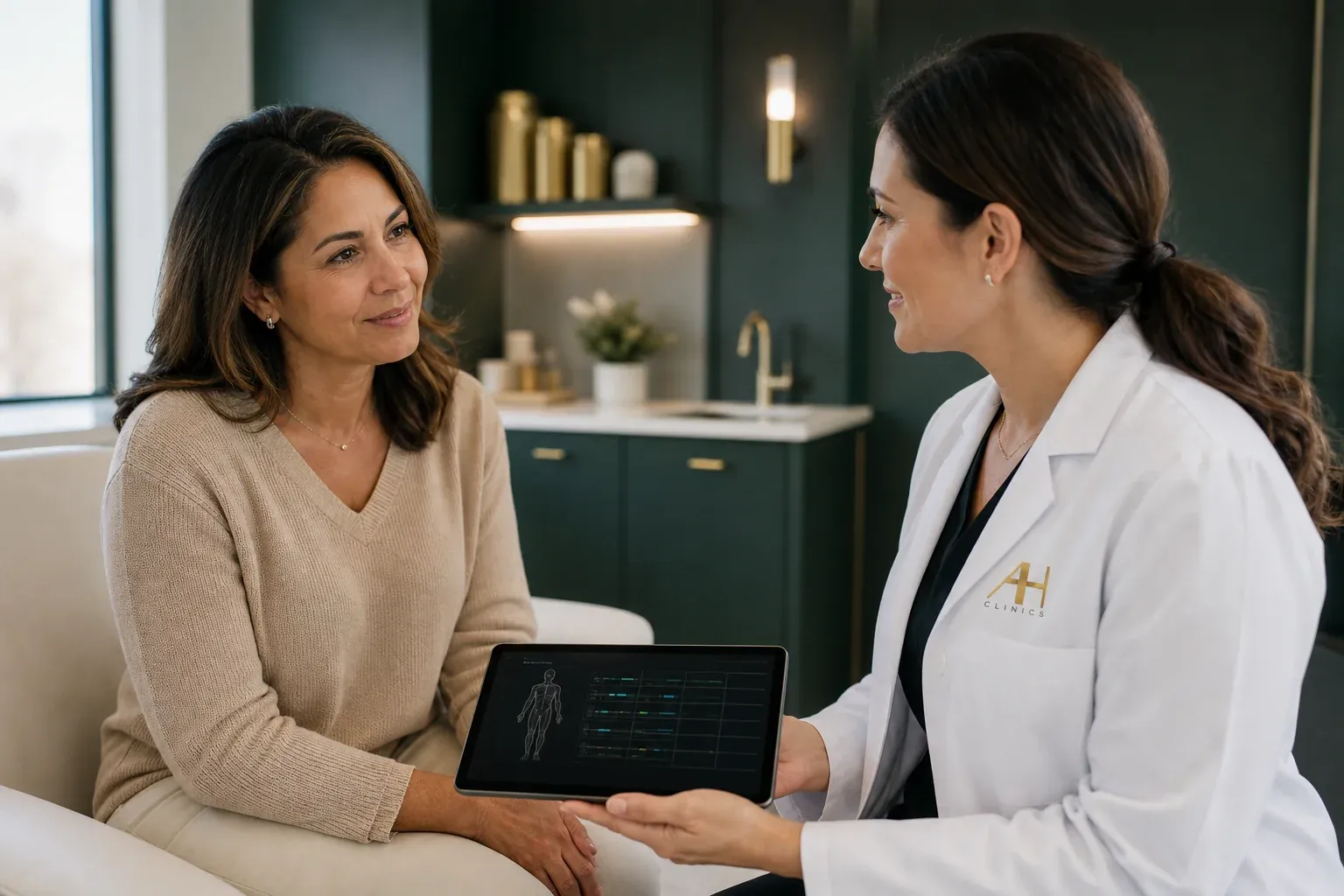

Hormone imbalance symptoms often show up quietly at first: irregular periods, stubborn weight gain, thinning hair, or nights interrupted by hot flashes. When these signs stack up, hormone testing can pinpoint the cause and open the door to targeted Hormone Replacement Therapy that restores balance and vitality.
Recognizing Hormone Imbalance Symptoms by Life Stage
Hormone imbalance symptoms rarely arrive as a single, obvious signal. The symptoms hormonal changes trigger can vary widely from person to person, showing up as fatigue that lingers no matter how much you sleep, mood swings that feel disproportionate to daily stress, or skin and hair changes you cannot quite explain.
For women, these shifts often cluster around major life stages: puberty, pregnancy, postpartum recovery, and perimenopause. For men, declining testosterone can produce a slower but equally disruptive set of changes.
Because hormone levels regulate nearly every system in the body, from metabolism to sleep to reproductive health, even a modest imbalance can ripple outward into symptoms that feel unrelated at first glance.
How Hormonal Imbalance Affects Weight, Hair, and Mood
Unexplained weight gain is one of the most common reasons patients contact AH Clinics for hormone testing. When estrogen progesterone levels shift out of balance, or when thyroid hormones slow down, metabolism can stall even when diet and exercise stay consistent.
This is one of the clearest examples of how hormonal imbalances affect the body: fat storage patterns change, energy dips, and unexplained weight becomes difficult to shift through willpower alone. Our Weight Loss program is built around this reality, pairing lifestyle changes with hormone-informed care rather than treating weight as an isolated issue. Hair loss follows a similar pattern.
Thinning hair, increased shedding, or a receding hairline can all be signs of hormonal imbalance rather than simple aging. Elevated cortisol from chronic stress, low estrogen levels, or excess testosterone can each disrupt the hair growth cycle in different ways.
Patients often ask how our weight loss and hormone optimization program connects to hair health, and the answer is that the same hormonal imbalance driving stubborn weight gain is frequently behind hair thinning too. For many women, hormone imbalance symptoms first surface through changes in the menstrual cycle.
Periods that arrive early, late, or not at all, unusually heavy or light bleeding, or new premenstrual mood changes can all point to shifting estrogen and progesterone levels. Hot flashes, night sweats, and vaginal dryness tend to appear later, often signaling the transition toward perimenopause or menopause, when estrogen levels decline more sharply. Birth control adds another layer to this picture.
Hormonal birth control can mask underlying imbalances by supplying synthetic hormones on a fixed schedule, which means symptoms sometimes resurface once a patient stops taking it. Women who experience irregular periods, persistent acne, or mood changes after discontinuing birth control are often dealing with an imbalance that predated the prescription rather than one caused by it.
Hormone testing after stopping birth control can offer a clearer baseline for what your body is actually producing on its own.
When Hormone Imbalance Symptoms Signal a Larger Condition
Sometimes hormone imbalance symptoms point beyond everyday hormonal fluctuation toward a diagnosable condition. Polycystic ovary syndrome, or PCOS, is one of the most common hormonal conditions affecting women of reproductive age, often presenting with irregular periods, weight gain, acne, and excess hair growth on the face or body alongside hair loss on the scalp.
Thyroid conditions, whether an underactive or overactive thyroid, can produce a nearly opposite set of symptoms, including fatigue, anxiety, temperature sensitivity, and changes in weight that feel disconnected from diet. In men, low testosterone can drive many of the same complaints: fatigue, low mood, reduced muscle mass, and stubborn weight gain around the midsection.
Because these conditions share overlapping symptoms, it takes lab testing, not guesswork, to identify the specific hormone levels involved and rule out other conditions. Read more on testosterone therapy benefits if declining testosterone sounds familiar, or explore more on trt clinic options to see how in-person and online testosterone therapy compare.
Hormone symptoms overlap with a lot of other things. A free consultation and the right panel tell you which it is.
Getting Tested: How AH Clinics Diagnoses Hormonal Imbalance
Guesswork has no place in hormone care. AH Clinics uses comprehensive lab panels to measure hormone levels directly, rather than relying on symptoms alone to guess at a diagnosis. Testing typically evaluates estrogen, progesterone, testosterone, thyroid hormones, and cortisol, giving a full picture of how these systems interact rather than looking at any single hormone in isolation.
For a closer look at what these panels measure, our specialty lab testing for hormones page walks through what each result means. Once results come back, our team builds a treatment plan around your actual hormone levels and symptoms, which may include hormone replacement therapy, targeted lifestyle changes, or a combination of both.
If you are managing symptoms related to low testosterone specifically, our Testosterone Clinic offers a dedicated path forward with ongoing monitoring built in.
Frequently Asked Questions
What are the most common hormone imbalance symptoms? Common hormone imbalance symptoms include fatigue, unexplained weight gain, irregular periods, hot flashes, hair loss, mood changes, and low libido. Symptoms vary by age, sex, and which hormones are affected, so two people with the same underlying imbalance can present very differently.
Persistent or multiple symptoms together are a stronger signal than any single symptom alone.
Can birth control cause or hide a hormonal imbalance? Birth control can mask an existing hormonal imbalance by supplying steady synthetic hormones, so underlying issues like PCOS or thyroid dysfunction may not become apparent until you stop taking it. If symptoms such as irregular periods or acne return afterward, hormone testing can help identify what your body is producing naturally.
How does hormone testing work? Hormone testing typically involves a blood draw that measures levels of estrogen, progesterone, testosterone, thyroid hormones, and cortisol, among others. AH Clinics reviews your results alongside your symptoms and health history to identify patterns, then builds a treatment plan tailored to your specific hormone levels rather than a generic protocol.
Is weight gain always related to hormones? Not always, but hormonal imbalance is a common and often overlooked contributor to unexplained weight gain, especially when diet and exercise habits have not changed. Thyroid hormones, cortisol, and estrogen progesterone balance all influence metabolism, so ruling out a hormonal cause is a reasonable early step before assuming lifestyle factors alone are responsible.
When should I see a doctor about hormone symptoms? Consider hormone testing if you have persistent fatigue, irregular periods, hot flashes, unexplained weight changes, or hair loss lasting more than a few cycles or months. Early evaluation can identify treatable causes like thyroid conditions or PCOS before symptoms worsen, and gives you a clear hormone level baseline to track over time.
Start Your Hormone Testing Journey at AH Clinics
You do not have to guess your way through hormone imbalance symptoms or wonder if what you are feeling is normal. Book Now for a consultation and get a personalized hormone testing plan built around your actual levels and goals.