

When weighing xeomin vs botox, both treatments use purified botulinum toxin to smooth fine lines and frown lines with clinically proven results. Botox and Xeomin are FDA-approved neurotoxins that temporarily relax muscles around the eyes and forehead, reducing crow feet and lines wrinkles for three to six months.
By AH Clinics Team, Medical Aesthetics Specialists
Understanding Botulinum Toxin Neurotoxins
Both Botox and Xeomin belong to the same drug class: botulinum toxin type A. Derived from Clostridium botulinum bacteria, each product contains a purified neurotoxin that blocks acetylcholine release at the neuromuscular junction. When injected into targeted facial muscles, this mechanism prevents the repeated contractions responsible for visible lines wrinkles.
The FDA approved Botox (onabotulinumtoxinA) for cosmetic use in 2002 and Xeomin (incobotulinumtoxinA) in 2011. Merz Pharmaceuticals developed Xeomin as a "naked" neurotoxin, removing the accessory proteins that surround the core molecule in other formulations. This distinction matters clinically for patients who have developed resistance to a particular toxin type over repeated treatment cycles.
A 2014 review by Dressler and Benecke, published in the Journal of Drugs in Dermatology, confirmed that Xeomin's pure formulation may reduce the likelihood of neutralizing antibody formation, the mechanism behind toxin resistance in long-term patients.
How Each Treatment Works to Relax Muscles
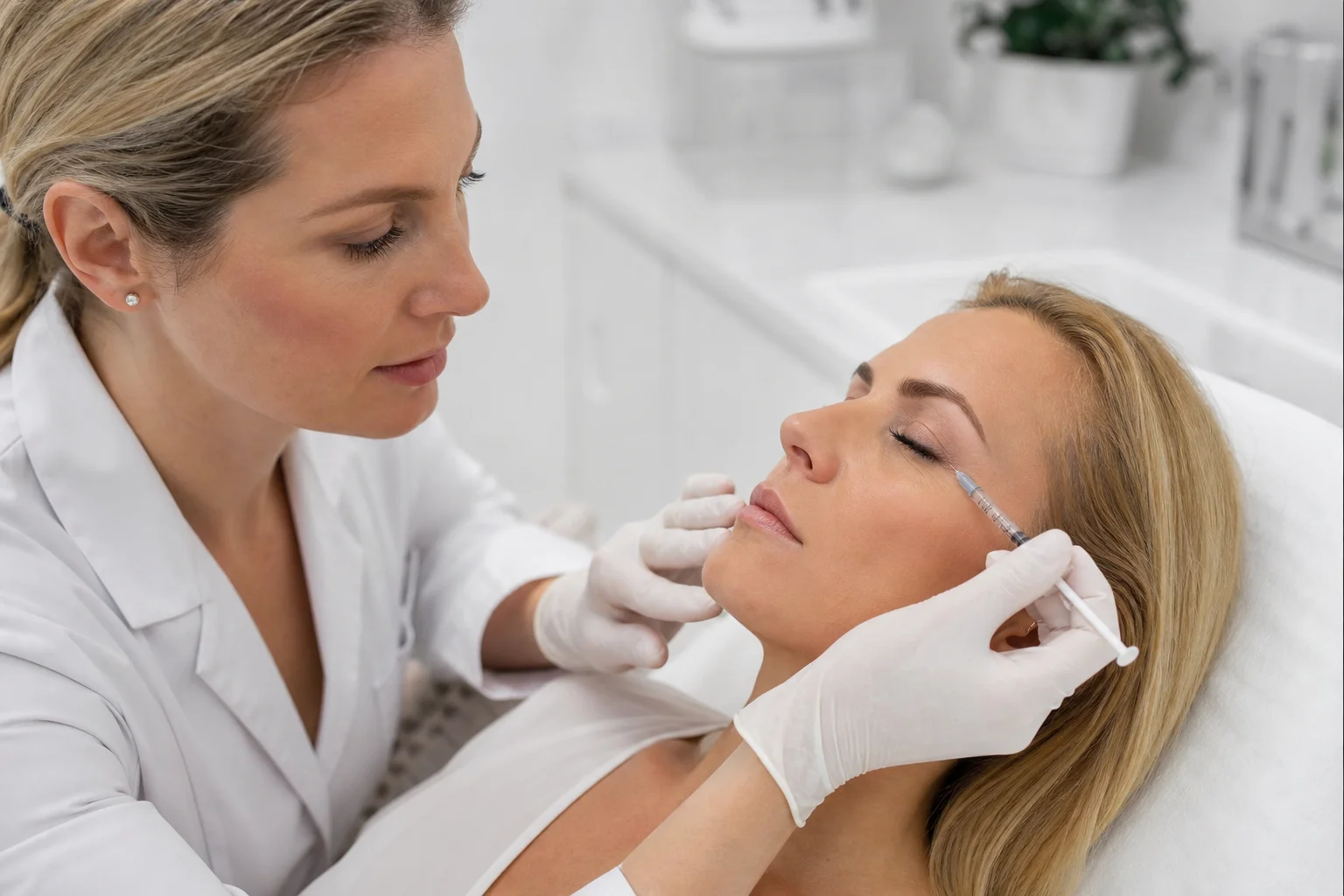
When you receive either botox xeomin treatment, the injected neurotoxin binds to nerve terminals at the neuromuscular junction and prevents the release of acetylcholine, the chemical signal that triggers muscle contraction. This action causes the treatment to relax muscles beneath the skin surface, and repetitive motion creases visibly soften.
Target Areas for Both Neurotoxins
Both products address a consistent set of facial concerns:
- Frown lines between the brows (glabellar region)
- Crow feet at the outer eye corners
- Forehead lines from frontalis muscle activity
- Fine lines around the perioral and chin areas
- Brow position adjusted through strategic injection placement
The outcomes for wrinkles botox and Xeomin treatments are clinically comparable for most patients. A randomized, double-blind trial by Carruthers et al., published in the Journal of the American Academy of Dermatology (2003), established equivalent muscle-weakening effects at equivalent doses for both formulations.
Xeomin vs Botox: Key Differences in Formulation
The most meaningful distinction in the xeomin vs botox comparison is protein composition. Botox contains onabotulinumtoxinA combined with complexing proteins including hemagglutinin proteins. Xeomin, or incobotulinumtoxinA, contains only the isolated 150 kDa core neurotoxin with no accessory proteins.
What the Protein Difference Means for Patients
For most patients, this formulation difference produces no detectable change in clinical results. Both toxins deliver similar onset times of three to five days, equivalent duration averaging three to four months (up to six months for some patients), and overlapping side effect profiles.
Where the distinction becomes relevant: patients who have noticed gradually reduced effectiveness from Botox may be developing antibodies to the complexing proteins surrounding the active toxin type. Switching to Xeomin introduces a different toxin type environment with fewer protein targets for the immune system, which can restore treatment effectiveness. A 2012 non-inferiority study by Sattler et al., published in the Journal of Neural Transmission, confirmed that incobotulinumtoxinA is clinically equivalent to onabotulinumtoxinA for glabellar line treatment.
Comparing Safety and Side Effects
Both xeomin botox formulations carry comparable safety records when administered by trained providers. Common, transient effects include mild bruising, localized swelling, and brief tenderness at the injection site. More uncommon effects such as temporary eyelid heaviness resolve as the neurotoxin metabolizes over several weeks.
Patients with a history of allergic reaction to botulinum toxin type A or to any component of either formulation should disclose their full allergy history before treatment. For those with concerns about reactivity to complexing proteins specifically, Xeomin's minimal-protein formulation presents a lower theoretical antigen load, though documented differential allergic reactions between the two products remain rare in published literature.
Both products are medically contraindicated for patients with neuromuscular junction disorders such as myasthenia gravis. Beyond aesthetics, both hold FDA approval for conditions including cervical dystonia, excessive sweating, and chronic migraine, which reflects the depth of their clinical evidence base. For a thorough look at published safety data, the Botox Safety research breakdown covers long-term evidence in detail.
Choosing the Right Neurotoxin for Your Goals
Deciding between xeomin vs botox is a clinical conversation between you and your provider, guided by your anatomy, treatment history, and specific goals.
When Xeomin May Be the Better Fit
- You have noticed reduced effectiveness from Botox across multiple treatment cycles
- You prefer a formulation with no accessory proteins
- You are beginning neurotoxin treatment for the first time and want a streamlined toxin type
When Botox May Be the Better Fit
- You have a well-established, consistent response to Botox with your current provider
- Your treatment targets areas where Botox has the most extensive published clinical data
- Your provider has calibrated dosing precisely for your anatomy using Botox units
Both neurotoxin treatments complement other rejuvenation services. Patients addressing overall wellness alongside facial aesthetics frequently combine their sessions with IV Therapy formulated for hydration, vitamin replenishment, and cellular support.
Frequently Asked Questions
Is Xeomin as effective as Botox for treating fine lines and frown lines?
Yes. Multiple peer-reviewed trials confirm clinical equivalence between the two botulinum toxin type A products for treating fine lines, frown lines, and crow feet. The 2012 Sattler et al. non-inferiority study published in the Journal of Neural Transmission found no statistically significant difference in patient outcomes between incobotulinumtoxinA and onabotulinumtoxinA at equivalent doses.
How long do results last with each treatment?
Both Xeomin and Botox typically produce results lasting three to four months, with some patients experiencing effects for up to six months. Duration varies based on the treated area, units injected, individual muscle activity, and prior treatment history. Consistent scheduling helps maintain results across sessions.
Can I switch between Xeomin and Botox between appointments?
Yes. Switching between xeomin botox products between sessions is clinically acceptable and commonly done. Both function as botulinum toxin type A and share the same mechanism of action. If tolerance has developed to one product, changing to the other toxin type often restores the full clinical response for most patients.
What should I tell my provider before receiving a neurotoxin injection?
Disclose any history of allergic reaction to prior botulinum toxin injections, current medications including blood thinners, any diagnosed neuromuscular conditions, and previous aesthetic treatments in the target area. This history allows your provider to select the appropriate product, dosing, and injection placement for your specific anatomy.
Is there a difference in cost between Xeomin and Botox?
Pricing depends on geographic location, provider experience, and the total units required to achieve your desired outcome. AH Clinics offers transparent pricing during consultation. The most meaningful comparison is the total investment to reach your goals, rather than the per-unit price of either product alone.
Schedule Your Xeomin or Botox Consultation at AH Clinics
Your provider's expertise with facial anatomy and neurotoxin injection technique is the most important factor in achieving optimal results with either product. Book Now to schedule a consultation at AH Clinics and get a personalized recommendation for the treatment that best fits your goals.