
Hair restoration for men has moved well past over-the-counter shampoos. PRP therapy, prescription medications, and surgical hair transplant procedures now give men science-backed paths to fuller, healthier hair. Our Hair Restoration program at AH Clinics combines these options to match your specific pattern of hair loss and your goals for regrowth.
What Causes Hair Loss and Thinning Hair in Men?
Most male hair loss traces back to androgenetic alopecia, more commonly called male pattern baldness. This form of hair loss follows a predictable pattern, receding at the temples, thinning at the crown, or both, and it is driven largely by dihydrotestosterone, or DHT, a byproduct of testosterone metabolism.
DHT binds to receptors in the hair follicle and gradually shrinks it in a process called miniaturization, shortening the growth phase until the follicle stops producing visible hair. Genetics determine how sensitive your follicles are to DHT, which is why male pattern hair loss can start in your twenties for some men and not appear until middle age for others.
Because DHT is tied so closely to testosterone metabolism, men already exploring hormone optimization may find our guide to testosterone therapy benefits useful for understanding how the two systems connect, since shifts in hormone levels can influence how quickly pattern hair loss progresses.
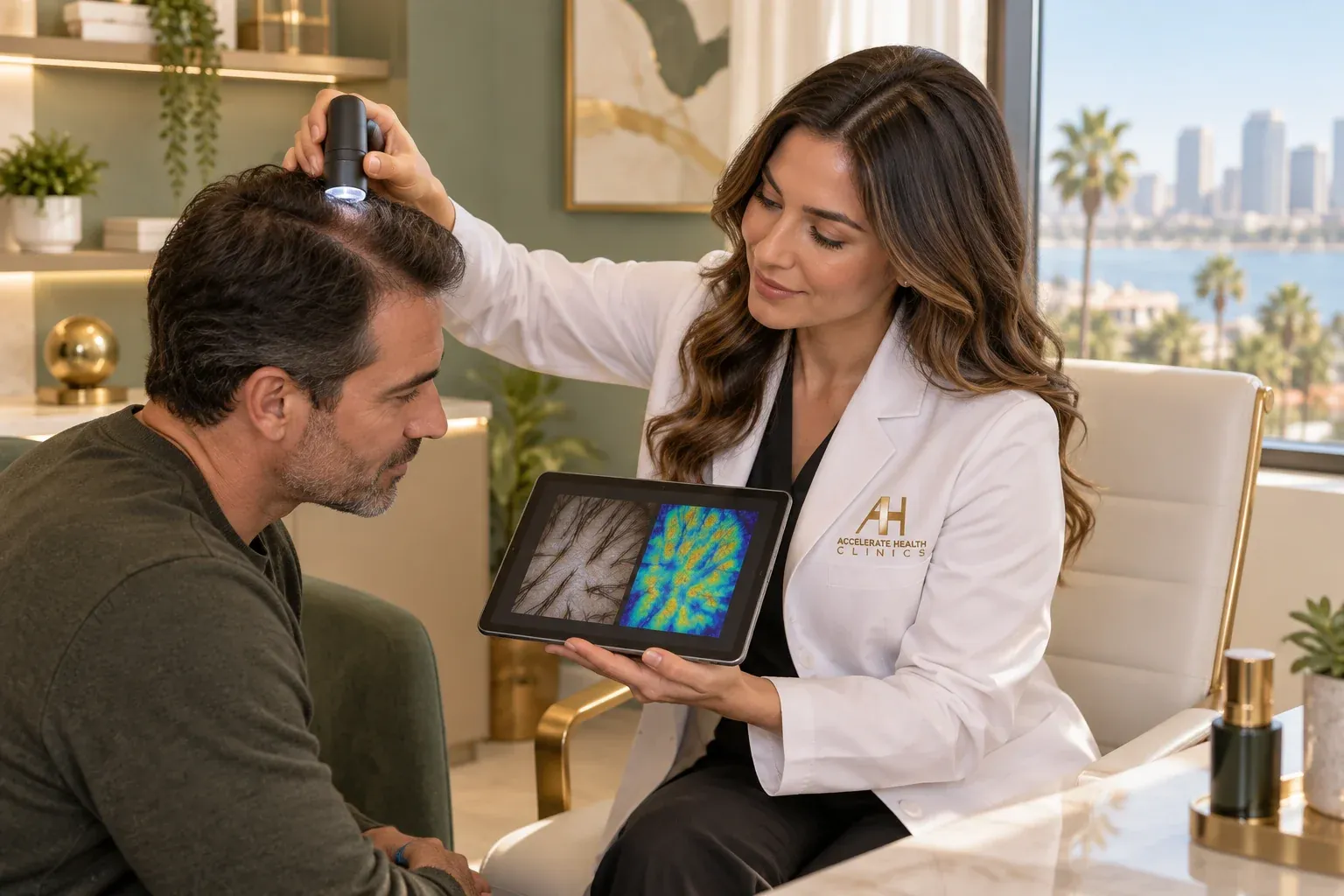
Thinning hair can also stem from stress, thyroid imbalances, nutrient deficiencies, or scalp conditions, so a clinical evaluation matters before starting any hair restoration for men plan. Bloodwork and a scalp exam help rule out these secondary causes, since treating androgenetic alopecia with the wrong products will not resolve hair loss driven by an underlying medical issue.
Identifying whether male pattern baldness or another factor is driving your hair loss shapes which treatments will actually work and how quickly you can expect to see results.
Hair loss is easier to treat early. A free consultation with a licensed provider will tell you where you stand.
Topical and Oral Medications for Hair Restoration
Medication is usually the first line of defense against progressive hair loss, and two options have the strongest track record among the many products marketed for regrowth.
Minoxidil
Topical minoxidil is applied directly to the scalp and widens blood vessels around the hair follicle, delivering more oxygen and nutrients to support hair growth. It is available over the counter in liquid and foam formulations, and consistent daily use over several months is required before most men notice visibly thicker hair.
Results typically plateau, and stopping treatment reverses the gains within months, which is why minoxidil works best as a long-term commitment rather than a short course.
Finasteride
Finasteride is an oral medication that blocks the enzyme responsible for converting testosterone into DHT, directly addressing the hormonal driver of male pattern baldness. By lowering scalp DHT levels, finasteride slows shedding and, in many men, supports regrowth over time.
Because it works on the hormonal pathway rather than the scalp surface, it is often paired with topical minoxidil for a more complete hair restoration for men strategy, giving patients a combined approach that targets both the follicle and the hormone driving its decline.
Both medications require ongoing use, and a clinician should review your health history before prescribing either one, since finasteride in particular can carry hormonal side effects worth discussing during a consultation. Over-the-counter products that promise faster results without addressing DHT or follicle health rarely match the outcomes of a clinically guided regimen.
How PRP Therapy Supports Hair Growth
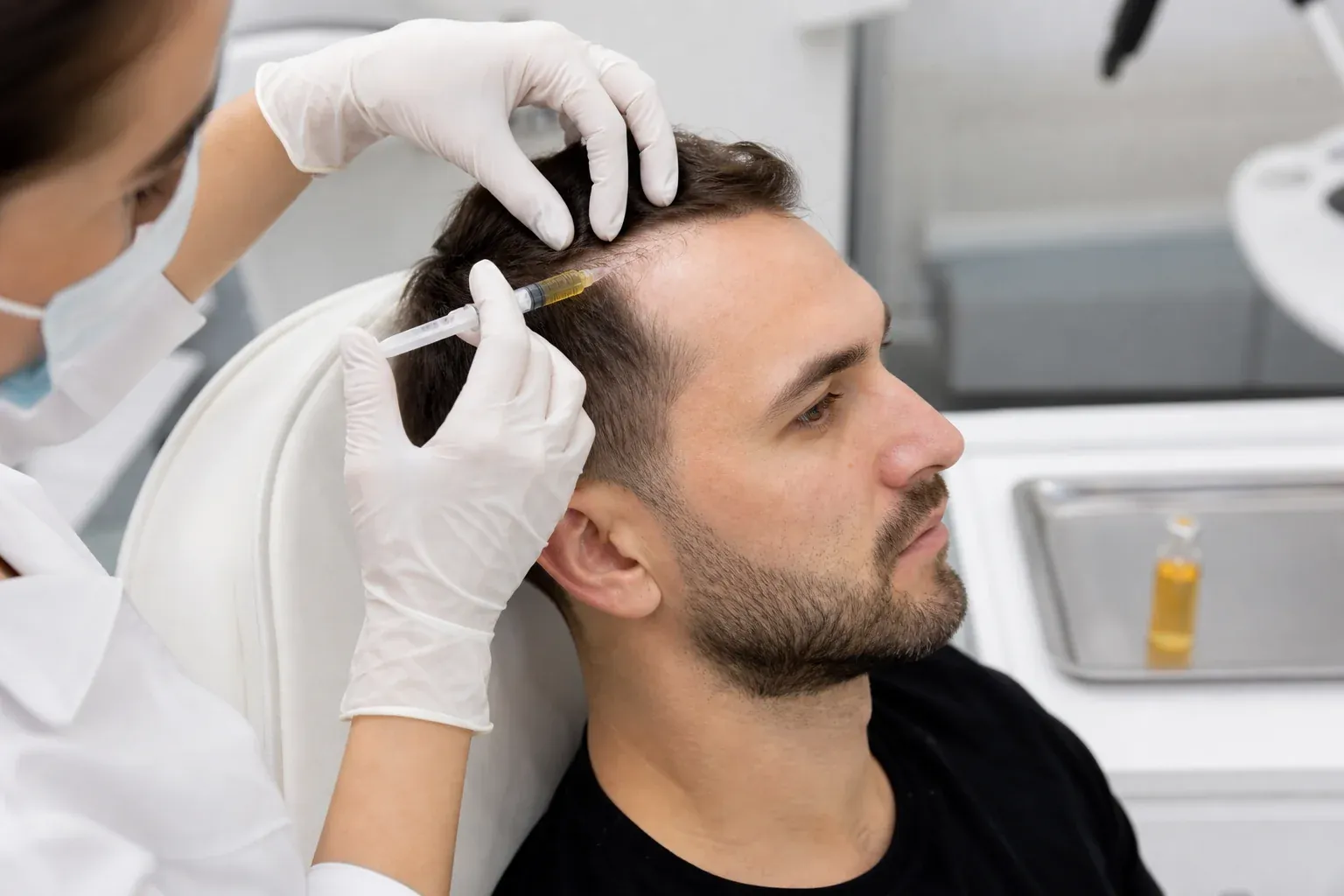
Platelet-rich plasma, or PRP, therapy uses a concentrated sample of your own blood plasma, rich in growth factors, injected directly into the scalp at the level of the hair follicle. Those growth factors stimulate the follicle's stem cells, extend the active growth phase, and encourage blood flow to areas experiencing thinning hair.
PRP is typically delivered in a series of sessions spaced several weeks apart, followed by periodic maintenance visits, and many men see improvements in hair density and shaft thickness within a few months of starting treatment.
It pairs well with medication-based hair restoration because it addresses the follicle directly rather than relying solely on systemic hormone changes, and it carries minimal downtime since the procedure uses the patient's own blood rather than a synthetic product.
The same growth-factor science that supports hair density also underpins skin rejuvenation, which we cover in more depth in our glow peptide deep dive for patients interested in the broader regenerative approach.
Hair Transplant Surgery for Advanced Hair Loss
When medication and PRP no longer produce the density a patient wants, hair transplant surgery becomes the next consideration. The most common modern technique, follicular unit extraction, removes individual hair follicles from a donor area, usually the back of the scalp where hair is genetically resistant to DHT, and relocates them to thinning or balding regions.
Because transplanted follicles retain their original DHT resistance, results from a hair transplant are considered permanent, though continued use of minoxidil or finasteride is often recommended to protect the surrounding native hair from further pattern hair loss.
Recovery is generally straightforward, with visible regrowth building over the following months as transplanted follicles cycle into their active growth phase, first shedding the transplanted hair shaft before new growth emerges from the follicle. Hair transplant surgery works best for men with stable donor hair and realistic expectations about timeline, since full results take close to a year to mature.
Patients considering this route should also expect a period of coordination between their surgical provider and any ongoing medication plan to preserve results long term. The best hair restoration for men plan depends on the stage and pattern of your hair loss, your timeline, and whether hormonal factors like DHT are the primary driver.
A clinical evaluation, often including a scalp exam and a review of your family history of male pattern baldness, helps determine whether topical products, oral medication, PRP, or a hair transplant referral is the right starting point. Some men benefit from combining approaches, using finasteride to slow further loss while PRP rebuilds density in thinning areas.
Others are further along and are better served by discussing surgical options first. If you are also weighing hormone optimization alongside your hair restoration for men plan, our guide to trt clinic options breaks down what to expect from testosterone care in San Diego, since addressing hormone levels alongside scalp treatment often produces the most consistent results.
Reach out through our Contact page to schedule a consultation and get a plan built around your scalp, your goals, and your timeline.
Frequently Asked Questions
How long does it take to see results from hair restoration treatments? Most medications and PRP therapy take three to six months before visible improvement in hair growth appears, since hair follicles must cycle through their natural growth phases. Hair transplant results take longer, often nine to twelve months, as transplanted follicles establish new growth cycles in their new location.
Can minoxidil and finasteride be used together? Yes, many men use topical minoxidil and oral finasteride together since they work through different mechanisms, one supporting blood flow to the follicle and the other reducing scalp DHT. A clinician can confirm this combination fits your health profile before you start.
Is PRP therapy painful? Most patients describe PRP therapy as mildly uncomfortable rather than painful, since a topical numbing agent is typically applied to the scalp before injections. Sessions usually take under an hour with no significant downtime afterward, so most men return to normal activity the same day.
Does hair transplant surgery look natural? Modern follicular unit extraction techniques place individual follicles at natural angles and densities, so healed results typically blend with existing hair. Choosing an experienced provider and following post-procedure care instructions both support a natural-looking outcome over the following months.
What causes male pattern hair loss versus other types of thinning? Male pattern hair loss follows a predictable receding and crown-thinning pattern driven by DHT sensitivity in specific follicles, while other causes, like stress or thyroid issues, tend to thin hair more diffusely across the scalp. A clinical evaluation distinguishes between them before treatment begins.
Start Your Hair Restoration for Men Plan at AH Clinics
Whether you are noticing the first signs of thinning hair or ready to explore surgical options, a personalized evaluation is the fastest way to find a treatment that actually works for your pattern of hair loss. Book Now to schedule your consultation with the AH Clinics team.