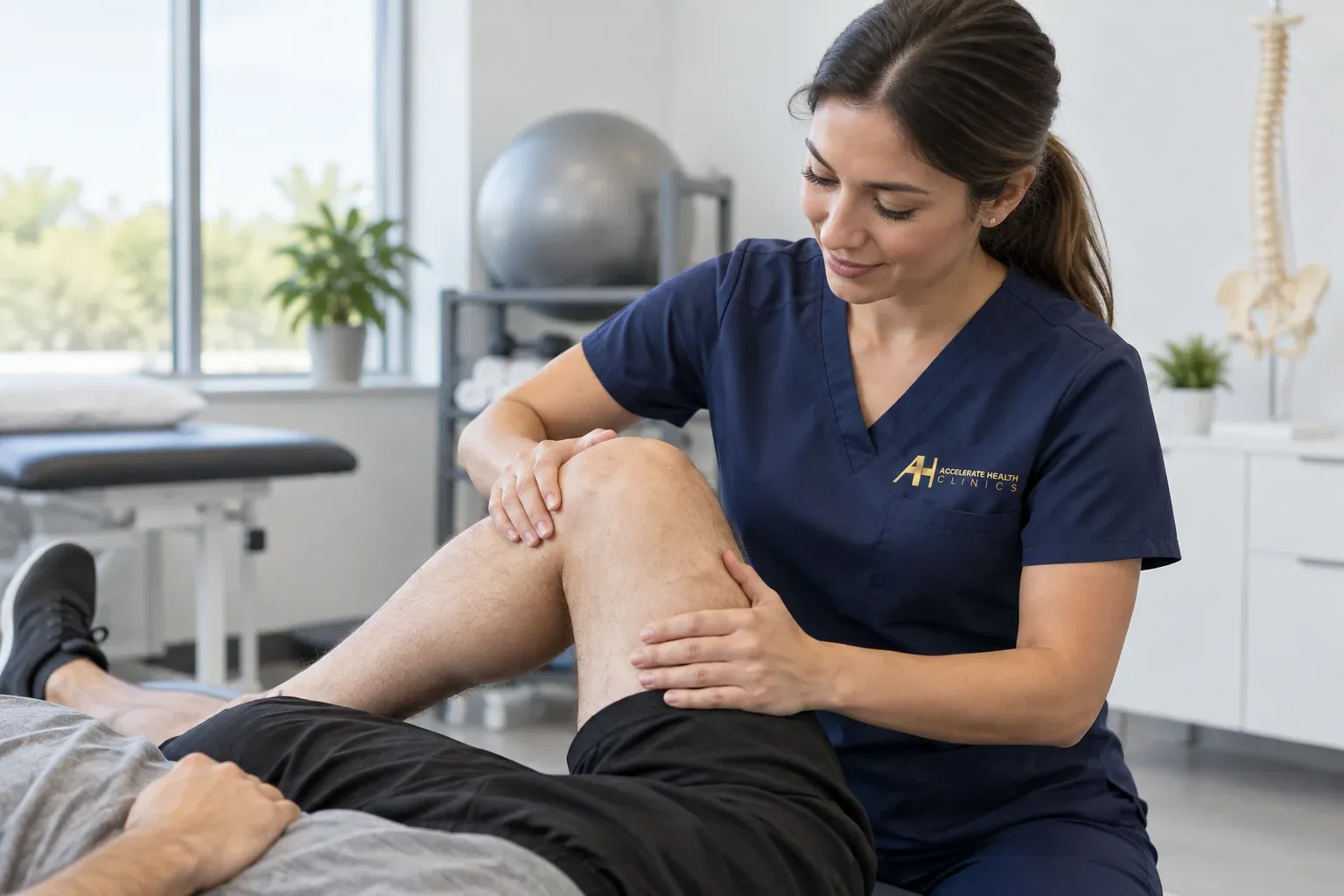

Peptide therapy for recovery is heavily marketed, but the research is thin. Studies on BPC-157 and similar compounds come mostly from animals, and human trials are small or missing. Here is what the data shows, and what to ask a licensed provider at our Peptides clinic in San Diego.
By The Medical Team at AH Clinics, Licensed medical providers, San Diego
Medically reviewed by Dr. Morteza Mirkarimi, family medicine, more than 20 years in practice.
Peptides are short chains of amino acids, the building blocks of proteins. Your body makes thousands of them, and many act like hormones, chemical signals that tell cells what to do. Researchers study whether lab-made versions can act as similar signals, and whether peptides help with processes like tissue repair, sleep or hormone release.
Delivery varies: injections under the skin, capsules, nasal sprays or creams. Prescription peptides, whatever the route, require a prescription.
Growth hormone secretagogues such as ipamorelin and CJC-1295: compounds meant to prompt the pituitary gland to release growth hormone. Studies mostly track hormone levels, not injury outcomes.
Collagen peptides: oral dietary supplements, not injections. Small human trials have looked at joint and soft-tissue outcomes with mixed results.
Do Peptides Work for Recovery? What the Evidence Shows
So do peptides work for recovery? Possibly for some uses, but no one can say with confidence yet. The peptide therapy evidence runs from interesting animal data to very little in people.
What the animal studies suggest
In rats, BPC-157 has been linked to faster repair of tendon, ligaments and muscles. Proposed mechanisms include better blood flow through new blood vessel growth and reduced inflammation, but none are confirmed in people. Published reviews of the orthopedic literature have noted that almost all BPC-157 work is preclinical, meaning lab or animal research.
The healing process in animal and human connective tissues is not the same, so a rodent result is a lead, not an answer.
Does peptide therapy help with injury recovery?
Human evidence is limited to a handful of small, early studies. We know of no large randomized trial that settles the question for BPC-157 or TB-500. Some growth hormone-releasing compounds have more human data, but mainly on hormone levels rather than on healing in muscles or soft tissues.
Can peptide injections help with joint pain?
Some people report relief, but personal reports are not controlled data. Pain scores often fall with placebo too, and aches and pains in the joints tend to rise and fall on their own. Collagen supplements have a few small human trials with mixed results.
Can peptides regrow knee cartilage?
We know of no human trial showing that any peptide regrows cartilage, and claims of tissue regeneration deserve extra skepticism until trials in people exist. A physical exam and imaging by a sports medicine or orthopedic clinician show what is actually happening inside a knee.
The names that come up most for injury, muscle and tendon recovery:
- BPC-157: a lab-made sequence modeled on a protein found in stomach fluid. Most findings come from rodent studies of injuries to tendon, ligaments and muscles.
- TB-500: a synthetic fragment related to thymosin beta-4, a protein involved in cell movement and wound repair. The evidence is largely lab and animal work.
- Wolverine Stack: a marketing name for a blend, commonly BPC-157 with TB-500. A blend adds a second unknown instead of answering the first.
What Does the Evidence Not Show About Peptide Therapy for Recovery?
Wellness marketing often lumps every therapeutic peptide together, though each has its own mechanism, evidence and regulatory status. The gaps are larger than the findings: No large human trials for most recovery compounds. Effect size, ideal duration and long-term safety remain unknown.
No reason to assume animal results carry over. Species differ in tissues, speed of tissue repair and how they process a drug. No evidence in healthy athletes.
Studies in injured animals say little about speeding up recovery in healthy people. Before-and-after photos prove little. Posts showing peptide injections before and after have no control group, and recovery often improves with time, rest and rehabilitation anyway.
No standard protocol. Products, blends and pharmacies differ, so one person's result says little about another's. No shared evidence with other goals.
Claims about weight loss or fat loss rest on different compounds and different studies, so recovery findings do not transfer to them. Well-established recovery drivers still do most of the work: progressive loading guided by a physical therapist, enough protein to maintain muscles, better sleep and time. Those usually come first, before adding anything else.
Is Peptide Therapy for Recovery Safe and Legal?
Safety data are the weakest part of the picture. Most research is short and preclinical, so long-term effects are unknown. Side effects depend on the compound.
Redness, swelling and discomfort at the injection site are common with injected products in general. Growth hormone-releasing compounds may cause fluid retention, headache or changes in blood sugar.
Some clinicians also raise a theoretical concern about compounds that promote new blood vessel growth in anyone with a cancer history or an active inflammatory condition, which is one reason a full medical history matters. Product quality is a separate risk: items bought online without pharmacy oversight may not contain what the label says.
On the legal side, FDA has not approved BPC-157 or TB-500 for any use, and compounded preparations are not FDA-approved. Pharmacy compounding rules for several of these compounds have shifted, and peptide regulation changes affect which products a provider can obtain. Athletes in tested sports should also know that the World Anti-Doping Agency prohibits BPC-157 and growth hormone-releasing compounds.
For the peptides a clinic offers, the route is a prescription, and each product's regulatory status should be explained before any decision.
Who Might Consider Peptide Therapy, and What Should They Ask a Clinician First?
People who ask about this usually have a stubborn overuse injury, are returning from a sports injury or are recovering after surgeries. Whether any option fits depends on an evaluation of your history, medications and, when relevant, lab work.
Hormones are one example: a clinician reviewing slow recovery may check labs first, and options such as Hormone Replacement Therapy belong to a separate conversation about those results. How do people get peptide injections? Through a prescription after an evaluation, not through a website checkout.
AH Clinics has operated in San Diego for more than 10 years, and our peptide page lists a free consultation with a licensed provider.
Ask for specifics, starting with these questions: Which pharmacy makes this product, and what exactly is in it? Is it FDA-approved for my situation, or is it compounded or unapproved? What does the human evidence show for my specific injury? Which side effects should I watch for, and how will you monitor me? What are the alternatives, such as physical therapy, imaging or other treatments? How will we judge whether it is working, and when would we stop?
Frequently Asked Questions
How long does peptide therapy take to work for recovery?
No reliable timeline exists, because human trials are limited and animal studies use time frames that do not translate to people. Recovery speed depends on the injury, your age, rehabilitation and sleep. A sound plan sets checkpoints for whether to continue, adjust or stop, rather than promising a date.
Are peptides backed by clinical research?
Only partly. Clinical research means studies in people. For BPC-157 and TB-500 the data are mostly animal and lab work, with a few small human studies.
Collagen supplements and some growth hormone-releasing compounds have more human data, though not for every recovery claim. Ask which study supports the exact product being offered.
Are peptides for recovery approved by the FDA?
Generally no. FDA has not approved BPC-157 or TB-500 for any use, and compounded preparations are not FDA-approved. Some peptide drugs are approved for other conditions, which is a different matter.
Using a compound for recovery is an unapproved use, so a prescriber should explain the status of any product plainly.
What are the side effects of peptide therapy?
They depend on the compound. Injection-site redness, swelling and discomfort are common with injected products. Growth hormone-releasing compounds may cause fluid retention, headache or changes in blood sugar.
Long-term effects of most recovery compounds are unknown. Report any new symptom to your clinician promptly.
What is the downside of peptides?
The main downsides are thin human evidence, unapproved status for most recovery uses, uneven product quality and bans in tested sports. You may also spend money on something that does nothing for your injury. A licensed clinician can weigh those risks against your history before you decide.
Get a Straight Answer on Peptide Recovery Options
Bring your injury history and your questions to a free consultation with a licensed provider at AH Clinics, where we review the evidence for your situation before any decision is made. Pick a time through Book Now.
Peptide protocols are prescribed, not bought off a shelf. A free consultation decides whether one is right for you.