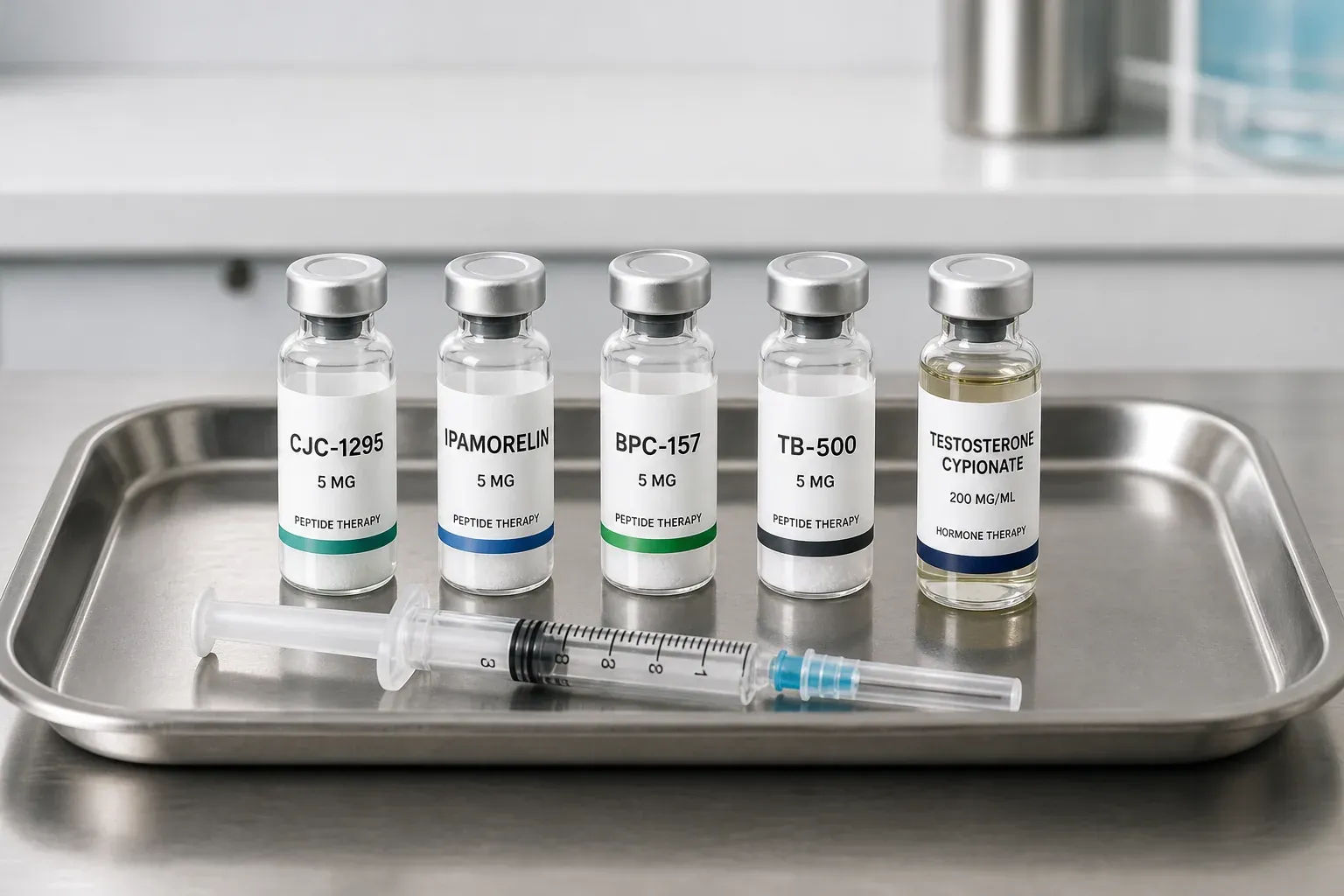

Choosing between peptide therapy vs hormone therapy comes down to what is driving your symptoms: peptides fine-tune specific biological signals, while Hormone Replacement Therapy restores hormones that have dropped below a functional range. AH Clinics providers weigh bloodwork, symptoms, and goals before recommending either path, or a combination of both.
Peptides are short chains of amino acids that act as targeted signaling molecules, telling a specific cell or gland to do one job well. A therapy peptide is generally selected to trigger a very specific response, such as stimulating the pituitary gland to release more growth hormone or supporting tissue repair after an injury.
Hormone therapy works differently: hormone replacement therapy supplies the actual hormone, testosterone, estrogen, or progesterone, when the body's own hormone production has declined below a functional range.
In practice, peptide therapy nudges existing systems to work more efficiently, while hormone replacement therapy directly restores hormone levels that bloodwork confirms are low. Neither approach is inherently better; they solve different problems.
A patient with clinically low testosterone usually needs the hormone itself replaced, while a patient recovering from a soft tissue injury or looking to support natural hormone production may respond well to a peptide protocol alone.
Bloodwork, Symptoms, and Goals: How Your Provider Chooses Your Protocol
Deciding between peptide therapy vs hormone therapy starts with lab work, never a symptom checklist alone. Providers order bloodwork to measure baseline hormone levels, then correlate those numbers with how the patient actually feels day to day.
Persistent fatigue, low libido, mood swings, and disrupted sleep are common hormone imbalance symptoms that prompt a closer look at whether hormone levels have dropped enough to justify hormone replacement therapy, or whether a more targeted peptide approach can restore function without a full hormone protocol. Age, goals, and overall health history matter too.
A patient chasing comprehensive hormone optimization after years of low energy and diminished hormone production is usually a stronger candidate for hormone therapy than a short-term peptide course. Someone focused on a specific outcome, faster recovery, better sleep, or tighter skin, may only need a therapy peptide targeted to that goal.
Providers usually revisit bloodwork every few months to confirm the plan is still the right fit.
Can Peptide Therapy and Hormone Replacement Therapy Work Together?
Yes, and providers often combine them intentionally. Hormone replacement therapy restores hormone levels to a healthy range, while certain peptides can support how well the body responds to that shift, better sleep quality, faster tissue repair, or steadier energy between hormone administrations.
Combining both is common for patients who want a comprehensive hormone optimization plan rather than a single intervention. That said, combining therapies is not automatic. A provider will confirm that both protocols make sense together based on bloodwork and health history, since stacking treatments without a plan can make it harder to tell which therapy is actually driving results.
The natural next step after establishing a hormone replacement baseline is often a short conversation about whether adding a specific peptide protocol fits your goals.
Peptide Therapy vs Hormone Therapy: Which Conditions Respond Best
Hormone therapy tends to be the stronger fit for conditions tied directly to a measurable hormone deficiency. Men with confirmed low testosterone often see meaningful energy and muscle gains once hormone replacement therapy restores levels into a healthy range, an improvement peptides alone typically cannot replicate when hormone levels are clinically low.
Women going through perimenopause or menopause, where declining estrogen and progesterone drive hot flashes, sleep disruption, and mood changes, often need hormone therapy to address the root cause rather than the symptoms alone.
Peptide therapy tends to shine in more targeted situations: recovery from injury or surgery, support for tissue repair, skin and collagen goals, or nudging the body's own hormone production without replacing a hormone outright. For patients focused on these specific outcomes, AH Clinics offers Peptides selected to match the goal rather than a blanket protocol.
Many patients fall somewhere in between, which is exactly why bloodwork and a real conversation matter more than picking a category first.
Comparing the Costs of Peptide Therapy and Hormone Therapy
Cost comparisons are hard to generalize because both peptide therapy and hormone therapy are priced around the specific protocol, not a flat rate. Hormone replacement therapy is usually structured as an ongoing plan, regular dosing plus periodic bloodwork to confirm hormone levels are staying in range.
Peptide therapy pricing depends heavily on which therapy peptide is used, the dose, and how long the protocol runs, since some peptides are used short term and others as part of a longer hormone optimization strategy.
Rather than assume one option is automatically cheaper, the most reliable way to compare costs is a personalized consultation where a provider maps out a protocol against your specific goals and gives you an actual quote based on your bloodwork rather than a generic estimate.
Side Effects: How Peptide Therapy and Hormone Therapy Differ
Side effect profiles differ because the two therapies work through different mechanisms. Hormone replacement therapy shifts your actual hormone levels, so effects are often dose-dependent and tied to how quickly estrogen, progesterone, or testosterone levels change, common examples include mild fluid retention, mood shifts, or skin changes as the body adjusts.
Providers monitor bloodwork regularly to keep dosing in a range that limits these effects. Peptide therapy generally has a narrower, more localized side effect profile since most therapy peptides target a specific pathway rather than shifting overall hormone levels. Injection site reactions are the most commonly reported issue.
Because peptide manufacturing and sourcing vary, the FDA has increased scrutiny of certain compounded peptides in recent years, which is part of why working with a licensed clinic that sources responsibly matters. Neither therapy is risk-free, and both should be monitored by a provider rather than self-managed.
How Long Before You See Results From Peptide Therapy or Hormone Therapy
Timelines vary by therapy and by what is being treated. Many patients on hormone replacement therapy notice changes in energy, mood, and sleep within the first several weeks as hormone levels stabilize, though full benefits, including body composition and libido changes, often take a few months to become clear.
Bloodwork at follow-up visits helps confirm the dose is working as intended rather than relying on how you feel alone. Peptide therapy timelines depend on the specific therapy peptide and goal. Peptides aimed at sleep or recovery can produce noticeable changes within weeks, while peptides supporting tissue repair or longer-term hormone optimization may take longer to show measurable results.
Providers typically set a reassessment point early in the protocol so the plan can be adjusted before you have invested months in an approach that is not working for your body.
Frequently Asked Questions
Is peptide therapy the same as hormone replacement therapy?
No. Peptide therapy uses short chains of amino acids to trigger a specific response, such as supporting tissue repair or nudging natural hormone production, while hormone replacement therapy supplies an actual hormone, like testosterone or estrogen, to restore levels that bloodwork shows are low. They can be used separately or together depending on your goals and hormone levels.
Is peptide therapy safer than hormone therapy?
Neither is automatically safer since both depend on proper dosing and monitoring. Hormone replacement therapy carries dose-dependent effects tied to shifting hormone levels, while peptide therapy generally has a narrower side effect profile but varies by compound and sourcing. A provider reviewing your bloodwork and health history is the only reliable way to judge which option carries less risk for you specifically.
Can women use peptide therapy instead of hormone therapy?
Some women use peptide therapy for specific goals like skin quality, sleep, or recovery. But when symptoms are driven by declining estrogen and progesterone, such as during perimenopause or menopause, hormone therapy usually addresses the underlying cause more directly. Many women benefit from a combination, decided after bloodwork confirms where hormone levels actually stand.
Do you need bloodwork before starting peptide or hormone therapy?
Yes. Bloodwork establishes your baseline hormone levels and overall health markers before any protocol starts, which is how providers confirm whether hormone replacement therapy, peptide therapy, or a combination fits your situation. Follow-up bloodwork during treatment also confirms the plan is working as intended rather than guessing based on symptoms alone.
Which is better for weight loss, peptide therapy or hormone therapy?
It depends on what is driving the weight gain. Certain peptides can support metabolism and appetite regulation directly, while hormone therapy may help when weight changes are tied to declining testosterone or estrogen. A provider reviewing your bloodwork and health history can determine which approach, or combination, fits your specific weight loss goals.
Start Your Personalized Hormone and Peptide Consultation
The right path between peptide therapy vs hormone therapy depends on your bloodwork, symptoms, and goals, not a guess. Contact AH Clinics to schedule bloodwork and a consultation so your provider can build a plan around what your hormone levels actually show.
Peptide protocols are prescribed, not bought off a shelf. A free consultation decides whether one is right for you.