
A TB test positive for immigration screening usually points to latent infection, not active disease. Your civil surgeon (a USCIS-designated doctor) orders a chest X-ray next, and a positive result alone does not end an application. Here is how an Immigration Medical Exam follow up works and how long it takes.
By The Medical Team at AH Clinics, Licensed medical providers, San Diego
Medically reviewed by Dr. James Boyd, family medicine and hospital medicine.
Tuberculosis (TB) is a bacterial infection that mostly affects the lungs. The CDC sets the screening rules for the medical examination most green card applicants complete, and USCIS reviews the results on Form I-693. The USCIS medical exam requirements call for civil surgeons, the doctors USCIS designates to perform immigration medical exams, to screen applicants age 2 and older with a skin test or a blood test.
TB testing is one requirement of that exam.
The goal is public health: finding infections such as tuberculosis before they spread. A positive result means the test found signs that your immune system has met the bacteria. It does not say whether they are active, and it does not say you are contagious.
Is a Positive TB Skin Test or Blood Test the Same as Having Active TB?
No. Both skin tests and blood tests are screening tools, not diagnoses. Skin tests place a small amount of protein under the skin, and a provider checks the reaction 48 to 72 hours later.
A blood test called an interferon gamma release assay (IGRA), such as QuantiFERON, measures interferon gamma, a signal immune cells release when they react to the bacteria. The CDC notes that skin tests can produce false positives in people who received the BCG vaccine, one of the vaccines given in many countries. Blood tests are not affected by BCG.
Because false positives happen, a positive screening result always needs a follow up before anyone draws a conclusion.
What Is the Difference Between Latent TB and Active TB on an Immigration Medical?
Latent TB infection means the bacteria are in your body but inactive. You have no symptoms, you cannot spread tuberculosis, and chest X-rays usually look normal. Active disease means the bacteria are multiplying.
It can cause a cough lasting weeks, fever, night sweats and weight loss, and it can spread through the air.
Providers still take latent TB infection seriously because it can become active in some people, and treatments can lower that risk. On an immigration medical, the distinction matters because USCIS and the CDC focus on active, infectious tuberculosis.
What Happens Next After a TB Test Positive for Immigration?
Your civil surgeon follows CDC technical instructions, so the steps are fairly consistent: Symptom and history review. The provider asks about cough, fever, weight loss, exposure and any past treatment. Chest X-ray.
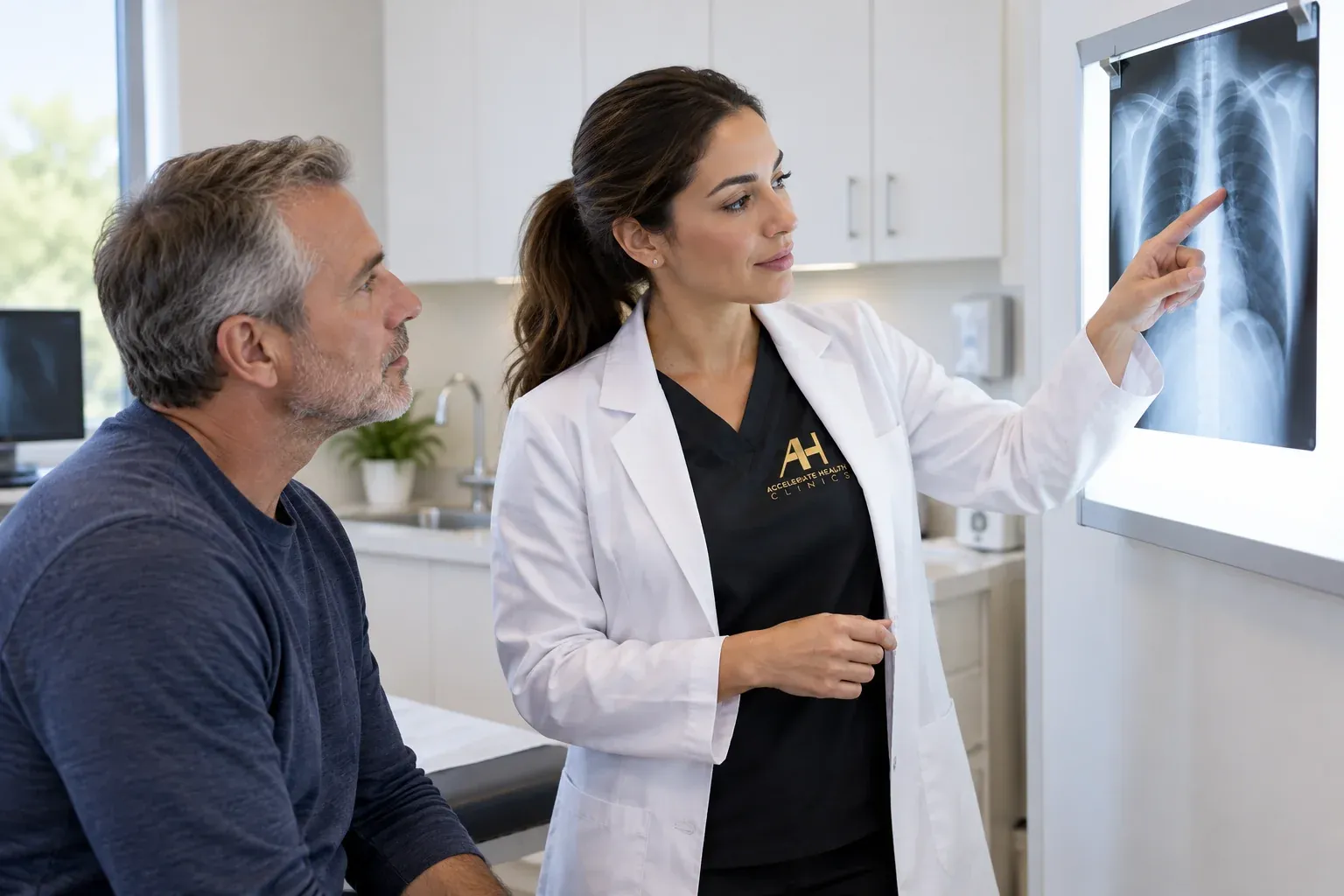
The image checks your lungs for changes the bacteria can cause. Sputum tests, if the X-ray looks abnormal. Sputum is mucus coughed up from the lungs, and a lab checks it for bacteria.
Referral, if active disease is suspected. A health department or treating physician takes over care, and the exam waits. Treatment discussion, if the evidence points to latent infection.
The provider explains treatment options or refers you for them. Form completion. The civil surgeon finishes the screening section once the evaluation is complete.
Do I Need a Chest X-Ray After a Positive TB Skin Test or QuantiFERON for Immigration?
Usually yes. CDC instructions for civil surgeons call for a chest X-ray after a positive skin test or IGRA result, and it is a standard requirement of the follow up. A normal image alongside a positive blood test usually points to latent infection, while an abnormal one leads to more testing.
X-rays use a low radiation dose, and anyone who is pregnant should tell the provider first.
Does a Positive TB Test Delay My Immigration Medical Exam Results?
It can. When screening is negative, the civil surgeon can usually finish the form once every other part is done. After a positive result, the X-ray, any sputum tests and treatment decisions come first, so an exam for immigration can span several appointments.
The rest of the medical examination keeps moving on its own track. The standard exam visit steps include a history review, a physical exam and a check of your vaccination record for required vaccines. Applicants 15 and older also get a syphilis blood test and a gonorrhea urine test.
Syphilis and gonorrhea are bacterial infections, and a positive result for either may need documented treatment first.
How Long Does the Follow Up Take After a Positive TB Test for Immigration?
Timelines vary by result, and these are typical ranges, not promises. A skin test is read 48 to 72 hours after placement. Blood tests often return results within several days.
A chest X-ray usually follows within days of a positive screening. Sputum cultures can take several weeks, because the bacteria grow slowly in the lab. A latent TB result with a normal X-ray may wrap up within days to a couple of weeks.
Suspected active disease follows the treatment timeline and can run for months.
How Long Does TB Treatment Take for Immigration Purposes?
Per the CDC, treatments for latent infection run from roughly 3 to 9 months, depending on the medication a provider chooses. Active disease treatments generally run at least 6 months. In many cases the civil surgeon can complete the form while a latent infection is evaluated or treated.
With active disease, the form may wait until the treating doctor documents that you are not infectious or that treatment is complete.
Will a Positive TB Test Affect My Green Card or Visa Application?
For most applicants, a latent TB result alone does not block a green card. USCIS and the CDC focus on active, infectious tuberculosis, which is a health-related ground of inadmissibility (a legal reason an application can be denied) until it is treated. That makes a TB test positive for immigration screening most consequential when the follow up finds active disease.
Can tuberculosis affect visas? Yes. Visas processed abroad use a separate exam from a panel physician (a doctor approved by the U.S. embassy or consulate), and active disease can delay those too.
This post covers the exam civil surgeons perform for applicants already in the United States.
Can I Still Get a Green Card if My TB Test Is Positive?
Often, yes. A positive screening can reflect latent infection, which is not an inadmissibility ground on its own. An immigration attorney can advise you on your situation.
Can I Get a Waiver or Class B Classification After a Positive TB Test?
The CDC's technical instructions sort findings into classifications. Class A means a condition that makes an applicant inadmissible, such as active infectious tuberculosis. Class B means a condition the civil surgeon notes that is not an inadmissibility ground on its own.
A waiver may be available on Form I-601 for certain health-related grounds, and an immigration attorney can say whether it fits. A waiver after a TB test positive for immigration screening is usually not the first step, since evaluation and treatment typically come first.
How Do I Get My I-693 Completed After a Positive TB Result?
Only a USCIS-designated civil surgeon can complete Form I-693, so confirm the designation before you book with any of the San Diego exam clinics you are comparing. Bring photo ID, your vaccination record, earlier results or chest X-rays, and any treatment records. The civil surgeon signs only after every required part is complete.
Frequently Asked Questions
What happens if a TB test is positive for a green card?
A positive screening usually triggers a symptom review and a chest X-ray with your civil surgeon. If the evaluation points to latent infection, the provider typically discusses treatments and the application can often continue. If it points to active disease, treatment usually comes first and the form may wait.
An immigration attorney can explain how this applies to your case.
Does USCIS require TB tests?
For most green card applicants filing from inside the U.S., yes. CDC technical instructions for civil surgeons call for TB testing, usually a skin test or an IGRA blood test, for applicants age 2 and older, and the civil surgeon records the result on Form I-693. It is a standard requirement of the exam.
What STDs does USCIS test for?
For applicants 15 and older, the screening usually covers syphilis, with a blood test, and gonorrhea, with a urine test, per CDC instructions for civil surgeons. HIV testing is no longer part of the immigration exam. A positive result for either of these infections may need documented treatment before the civil surgeon completes the form.
What diseases can deny a green card?
Health-related inadmissibility centers on communicable diseases of public health significance, and active, infectious tuberculosis is the one most relevant here. Other health grounds include missing required vaccines and drug abuse or addiction. Latent infection generally does not qualify on its own.
USCIS decides each case, so ask an immigration attorney about your situation.
What do they check at an immigration medical exam?
The civil surgeon reviews your medical history, performs a physical exam, screens for tuberculosis, checks your vaccination record and, for applicants 15 and older, tests for the infections syphilis and gonorrhea. Our team at AH Clinics can tell you what to bring before your visit.
Talk Through Your TB Result With the Team at AH Clinics
Our San Diego office at 9333 Genesee Ave Suite 250 is open 8 AM to 5 PM, Monday to Friday, and the team has operated in San Diego for more than 10 years. Ask what your immigration medical exam visit includes, then Book Now.
Not sure which panel you need? A free consultation with a licensed provider sorts it out in fifteen minutes.