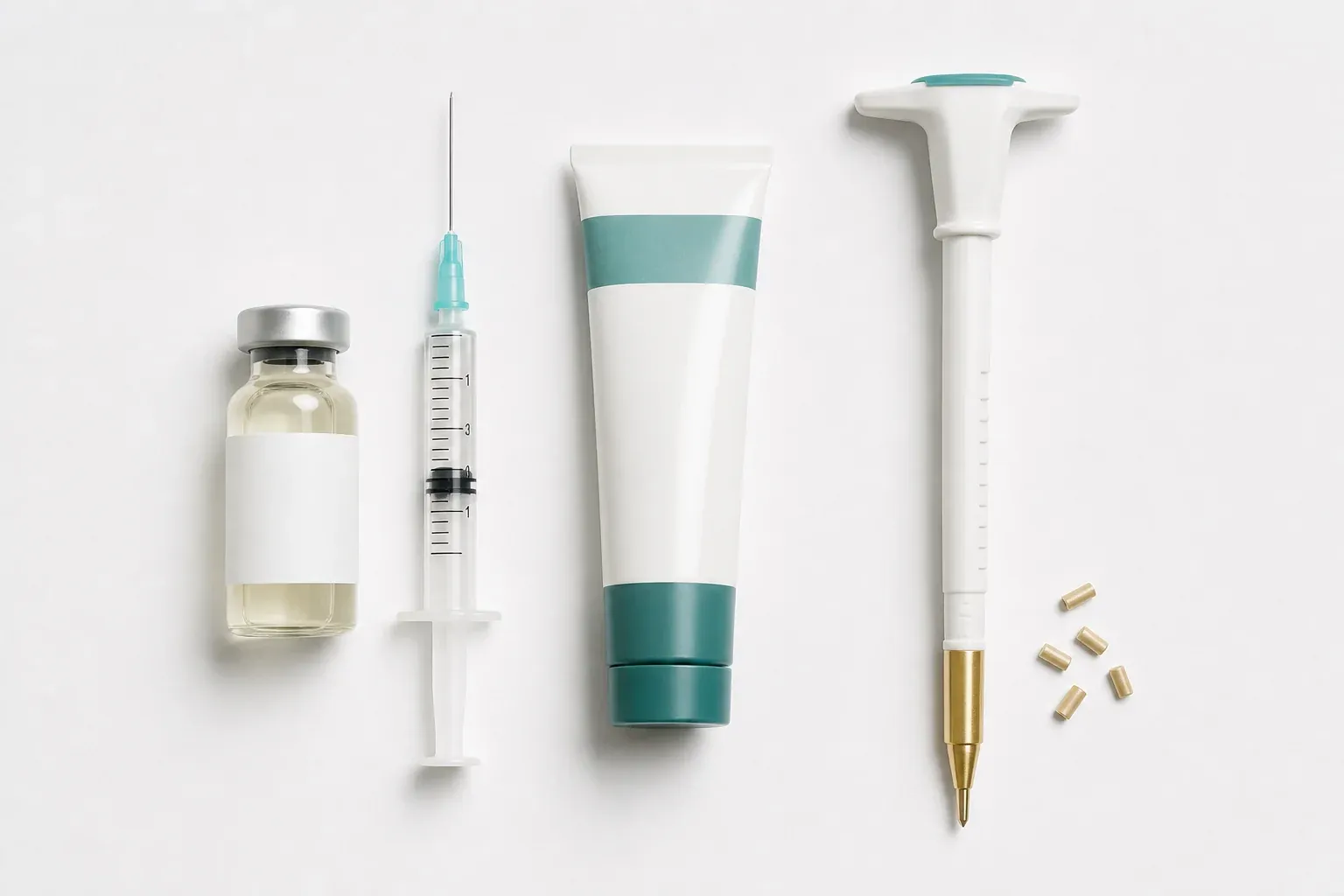
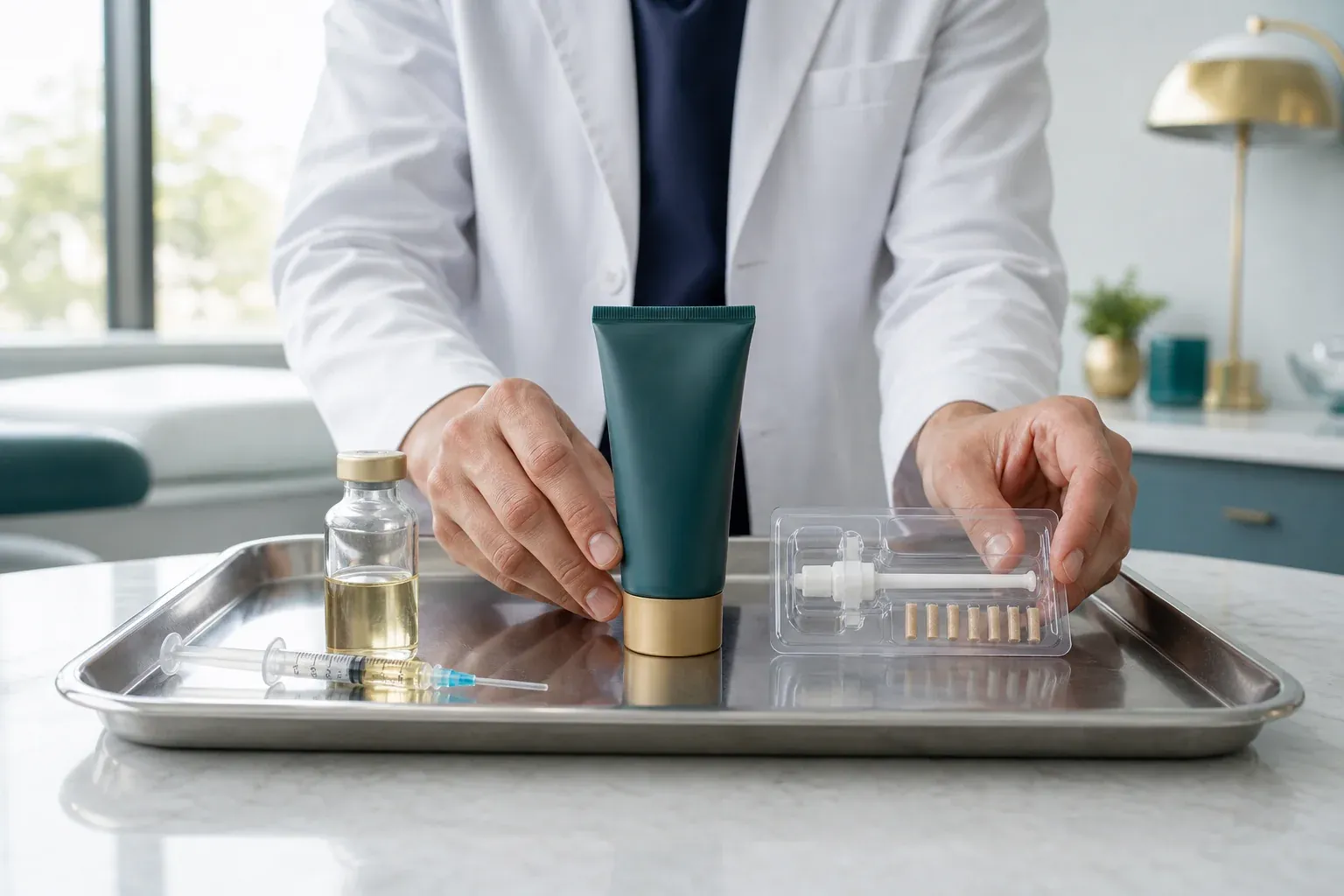
Choosing between testosterone injections, gels, and pellets comes down to weighing effectiveness, convenience, and side effects against each other. This guide has these testosterone delivery methods compared side by side, covering cost, dosing frequency, and how quickly each raises testosterone levels, so you and your Testosterone Clinic team can pick the right fit.
Testosterone Delivery Methods Compared at a Glance
Testosterone replacement therapy comes in a handful of forms, and most patients narrow their choice down to three main delivery methods: injections, topical gels, and subcutaneous pellets. Injectable testosterone, most commonly testosterone cypionate, is drawn into a syringe and administered on a set schedule, either at the clinic or at home once you've been trained.
Topical gels are applied daily to clean, dry skin and absorb gradually into the bloodstream over several hours. Testosterone pellets are small, rice sized cylinders inserted under the skin, usually near the hip, where they release hormone steadily for months at a time.
Oral testosterone exists as well, though it is prescribed far less often than the other three because of how it is processed by the liver, so most testosterone replacement plans built through Hormone Replacement Therapy focus on injections, gels, or pellets. The right choice usually comes down to how involved you want to be in day to day dosing.
When dosed correctly and monitored with regular blood work, all three testosterone replacement therapy options can raise testosterone levels into a healthy range. The difference is in the pattern of that increase. Injections tend to produce a noticeable peak in the days after each dose, followed by a gradual decline until the next one, which can mean more day to day fluctuation in energy and mood for some patients.
Gels release smaller amounts continuously, which usually keeps testosterone levels steadier throughout the day, though absorption can vary based on skin, sweat, and how consistently the gel is applied. Pellets deliver the most stable release over their lifespan, since the hormone diffuses slowly and predictably, though levels may taper in the final weeks before a new pellet insertion is due.
No matter which method you use, your provider tracks results with lab work, and dosing adjustments are based on how your body responds, not just which option you started with.
Which Method Works Fastest?
Injections raise testosterone levels fastest, often within a day or two of the first dose, which is why they are a common starting point when someone wants to feel a difference quickly. Gels take longer to build to a steady state, typically a few days to a couple of weeks.
Pellets are the slowest to reach full effect since the hormone has to diffuse out gradually, but once levels stabilize, they tend to stay consistent for months without any action needed from the patient.
Cost Differences Between Testosterone Injections, Gels, and Pellets
Cost varies by clinic, dose, and insurance coverage, so exact numbers should come from a consultation rather than a blog post. That said, the general cost pattern holds across most testosterone replacement therapy programs. Injections are usually the least expensive option per month, especially if you are trained to self administer at home, since the main cost is the vial of testosterone cypionate and supplies.
Gels tend to run higher, largely because daily use products require more packaging and manufacturing per dose. Pellets often carry a larger cost at the time of insertion, since that single visit covers months of hormone release, but averaged out over the pellet's lifespan, the monthly cost can land close to or even below daily gel use.
Ask your clinic for a breakdown of what's included, insertion fees, follow up labs, and dosage adjustments, so you are comparing full program costs, not just the sticker price of the product itself.
Which Testosterone Delivery Method Has the Fewest Side Effects?
Every testosterone delivery method carries some risk of side effects, and most overlap regardless of how the hormone gets into your system. Acne, fluid retention, mood changes, and shifts in red blood cell counts are possible with injections, gels, and pellets alike.
Injections carry an added risk tied to the peak and trough pattern, some patients notice mood or energy swings that track with where they are in the dosing cycle. Gels avoid that swing but come with a distinct concern: skin irritation at the application site and the risk of transferring hormone to someone else through skin contact.
Pellets avoid daily application and injection peaks, but the insertion procedure carries a small risk of infection or the pellet extruding, working its way back out through the skin. Hair loss is a possible side effect across all three methods in people genetically predisposed to androgenic alopecia, since it is driven by how the body converts testosterone, not by the delivery method itself.
Your provider reviews your health history and any current medications before choosing a method, since some side effects are more relevant for certain patients than others.
How Often Do You Need Testosterone Injections, Gel Applications, or Pellet Insertions?
Dosing frequency is one of the biggest lifestyle differences between these three methods. Testosterone injections are typically given every one to two weeks, though some patients split doses into smaller, more frequent shots to smooth out peaks and troughs. Gels are a daily commitment, applied at roughly the same time each day to keep testosterone levels steady.
Testosterone pellets are the least frequent by far, usually inserted once every three to six months depending on how quickly your body metabolizes the hormone. If a low maintenance routine matters most to you, pellets typically require the fewest touchpoints. If you would rather adjust dosing often based on how you feel, injections offer more flexibility.
Choosing the Right Testosterone Delivery Method for Your Lifestyle
With these testosterone delivery methods compared across effectiveness, cost, and side effects, the decision usually comes down to a few personal factors: comfort with needles, tolerance for a daily routine, how quickly you want results, and how your body responds to each option. Patients who want fast results and do not mind self injecting often start with testosterone cypionate.
Those who prefer to avoid needles altogether may lean toward gels, as long as they can commit to consistent daily application and take precautions against transfer. Patients who want the lowest maintenance option, and who do not mind an in office procedure a few times a year, often choose pellets.
Some clinics also offer both online and in-person testosterone therapy tracks, which changes how easily you can get labs drawn and adjust your plan along the way. Whichever option you are leaning toward, your provider can walk through how it fits your health history, goals, and daily schedule before you commit.
Frequently Asked Questions
Are testosterone pellets better than injections?
Neither is universally better, they suit different priorities. Pellets offer the most stable testosterone levels and the lowest daily effort, since insertions happen just a few times a year. Injections give you more control over dosing and are often less expensive per month.
The better option usually depends on whether you value convenience or flexibility, which is worth discussing directly with your provider.
Can testosterone gel transfer to other people?
Yes, testosterone gel can transfer through skin to skin contact before it fully absorbs, usually within a few hours of application. This is a real concern for partners, children, and pets who might come into contact with treated skin. Covering the application site with clothing and washing your hands after applying helps reduce the risk, and your provider can walk through specific precautions for your household.
Do testosterone pellet insertions hurt?
The insertion is a quick, in office procedure done under local anesthetic, so most patients feel pressure rather than sharp pain during the procedure itself. Some mild soreness, bruising, or tenderness at the insertion site is common for a few days afterward. Serious pain, swelling, or signs of infection are uncommon but should be reported to your provider right away.
How long do testosterone pellets last before they need replacing?
Testosterone pellets typically last three to six months, though the exact timeline depends on your individual metabolism, dose, and how your body responds to treatment. Many patients notice a gradual decline in energy or other symptoms as the pellet nears the end of its cycle, which is a signal that it is time to schedule a replacement and recheck testosterone levels.
Is testosterone gel or injections better for building muscle?
Both can support muscle gains and energy improvements tied to restoring testosterone levels, since muscle response depends more on consistent, in range hormone levels than on the delivery method itself. Some patients find injections easier to pair with structured training cycles because dosing is more adjustable.
Combined with resistance training, either method can support the muscle and strength gains associated with testosterone therapy benefits, when levels are properly monitored.
Start Comparing Testosterone Delivery Methods With Your Care Team
Choosing between injections, gels, and pellets is easier with lab work and a provider who knows your health history in hand. Book Now to schedule a consultation and find the testosterone delivery method that fits your goals.
Low testosterone is diagnosed on bloodwork, not symptoms alone. A free consultation starts with the panel.