
Deciding to stop treatment is a medical decision, and it works best when your provider at Testosterone Clinic drives the process. This guide walks through what a supervised testosterone therapy discontinuation looks like: how your provider tapers your dose, orders bloodwork, and manages symptoms so your body transitions safely, and when appropriate, back toward natural testosterone production.
Why Doctors Recommend Stopping Testosterone Therapy
Providers recommend stopping testosterone therapy for a range of reasons, and the decision is always individual. Some patients reach a point where the symptoms of low testosterone that brought them to Hormone Replacement Therapy in the first place have resolved, and their goals have shifted. Others develop side effects such as elevated red blood cell counts, acne, or mood changes that outweigh the benefits.
A patient planning a family may need to pause therapy because exogenous testosterone can suppress the hormonal signal that tells the testes to produce testosterone and sperm. Whatever the reason, the same principle applies: this is a decision made with a provider, not a decision made alone in response to a bad week or a rising bill.
Signs It Might Be Time to Discontinue TRT
Your provider may raise the topic of discontinuation if bloodwork shows hematocrit climbing too high, if blood pressure trends upward, or if your original goals for therapy, more energy, better mood, restored sexual desire, have already been met and ongoing monitoring no longer makes sense. None of these signs mean you should stop on your own; they mean it is time for a conversation.
What Happens to Your Body When You Stop Testosterone Therapy
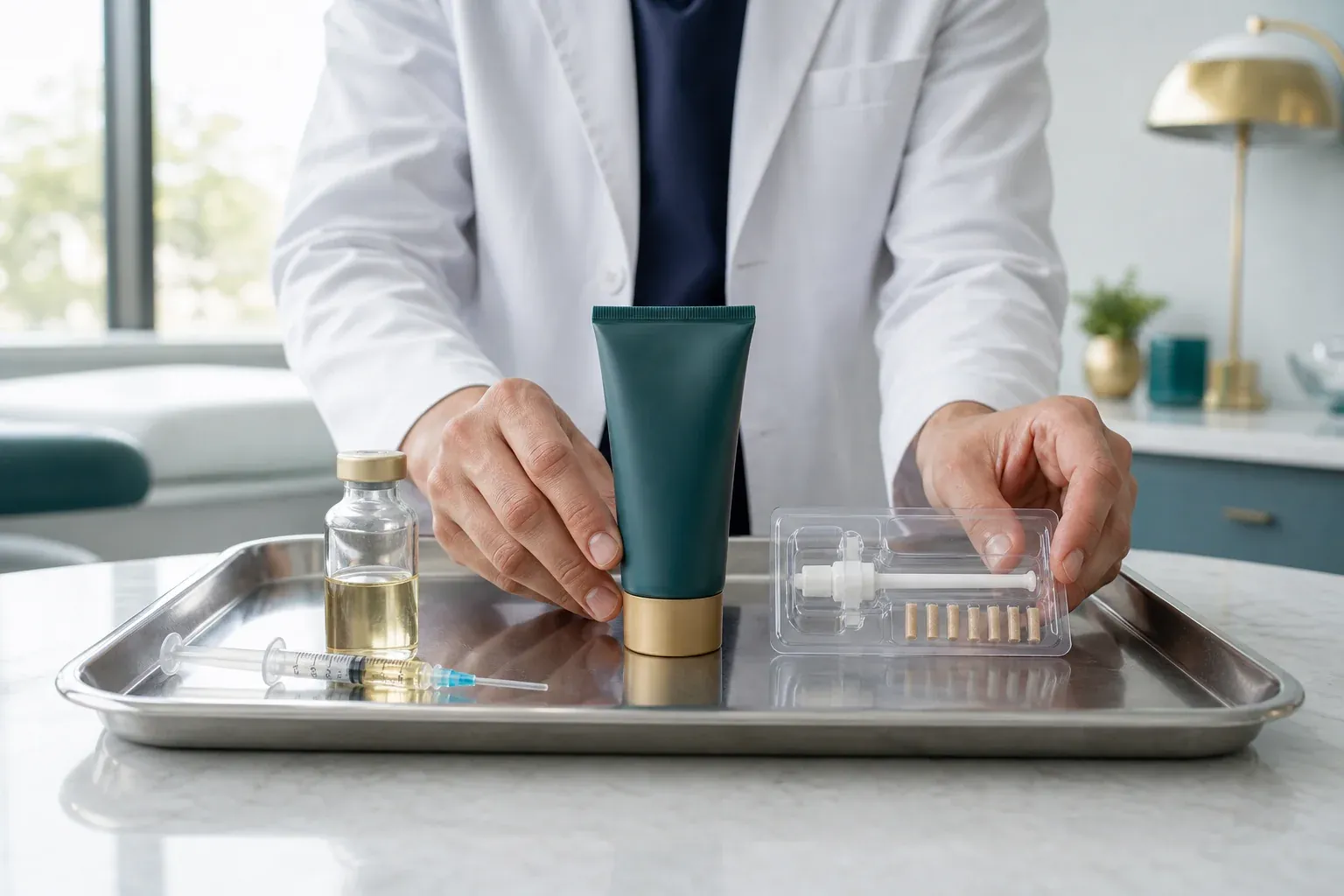
Once testosterone injections, gels, or pellets stop, exogenous testosterone clears from your bloodstream over days to weeks depending on the formulation.
During that window, natural testosterone production typically has not restarted yet, because the hypothalamic-pituitary-gonadal (HPG) axis, the hormonal feedback loop that tells your testes to produce testosterone, was suppressed while you were on therapy and needs time to wake back up.
That gap between exogenous testosterone leaving your system and your body's own hormones ramping back up is when most people notice symptoms as testosterone levels drop.
Will Your Testosterone Levels Return to Normal?
For many men, testosterone levels do recover once the HPG axis restarts, though the timeline and the final number vary by age, how long you were on testosterone replacement therapy, and your baseline function before you started. Some men return to a normal range within months.
Others, particularly those who started therapy for a documented low testosterone diagnosis, may find their natural production settles below where testosterone replacement therapy had it, which is worth discussing with your provider before you stop. Here is what a supervised testosterone therapy discontinuation looks like in practice, step by step.
Rather than stopping in one move, your provider reduces your dose gradually, spacing out injections further apart, lowering the dose per injection, or switching you to a shorter-acting formulation before stopping altogether, giving your body a gentler signal to resume its own production.
The exact taper schedule depends on which testosterone replacement therapy you were using, how long you were on it, and your bloodwork at each check-in.
What Happens If You Stop TRT Too Quickly Instead of Tapering
Stopping TRT abruptly instead of tapering tends to produce a sharper drop in testosterone levels and a rougher symptom window: fatigue, mood changes, and reduced sexual desire can hit harder and faster because the body has no transition period. If you stop TRT and notice symptoms that do not ease within a few weeks, contact your provider rather than waiting it out.
A gradual taper does not eliminate symptoms, but it usually softens them and gives your provider more chances to catch a problem in bloodwork before it becomes uncomfortable.
Symptoms to Expect During a Supervised Testosterone Discontinuation
Even with careful tapering, most people notice some symptoms as their hormones recalibrate to lower circulating testosterone. Expect some combination of fatigue, mood changes, reduced sexual desire, and some muscle loss or a decline in muscle mass as your body adjusts.
These shifts mirror classic hormone imbalance symptoms, low energy, mood swings, and reduced sexual desire, which is why tracking them against bloodwork rather than guessing matters.
How Long Does Testosterone Withdrawal Last?
Symptoms usually peak in the first few weeks after your last dose and then gradually ease over the following months as natural testosterone production increases. The exact duration depends on how long you were on therapy, your age, and your baseline hormonal function, so your provider will typically check in on a set schedule rather than leaving you to judge recovery on symptoms alone.
Recovering Natural Testosterone Production After Stopping TRT
Recovering natural testosterone production is not instant. The HPG axis has to restart its signaling, the testes have to respond to that signal, and testosterone levels have to climb back into range, a process that commonly takes several months and, for some men, longer. Bloodwork, not how you feel on a given day, is the most reliable way to confirm natural production has resumed.
What Is Post-TRT Therapy?
Post-TRT therapy refers to medications sometimes used to help restart natural testosterone production and support fertility after stopping testosterone replacement therapy, rather than simply waiting for the HPG axis to recover on its own.
Whether it is appropriate depends on how long you were on therapy, your fertility goals, and your bloodwork, so it is a decision to make with your provider, never a protocol to self-administer.
Monitoring and Bloodwork During Your Discontinuation
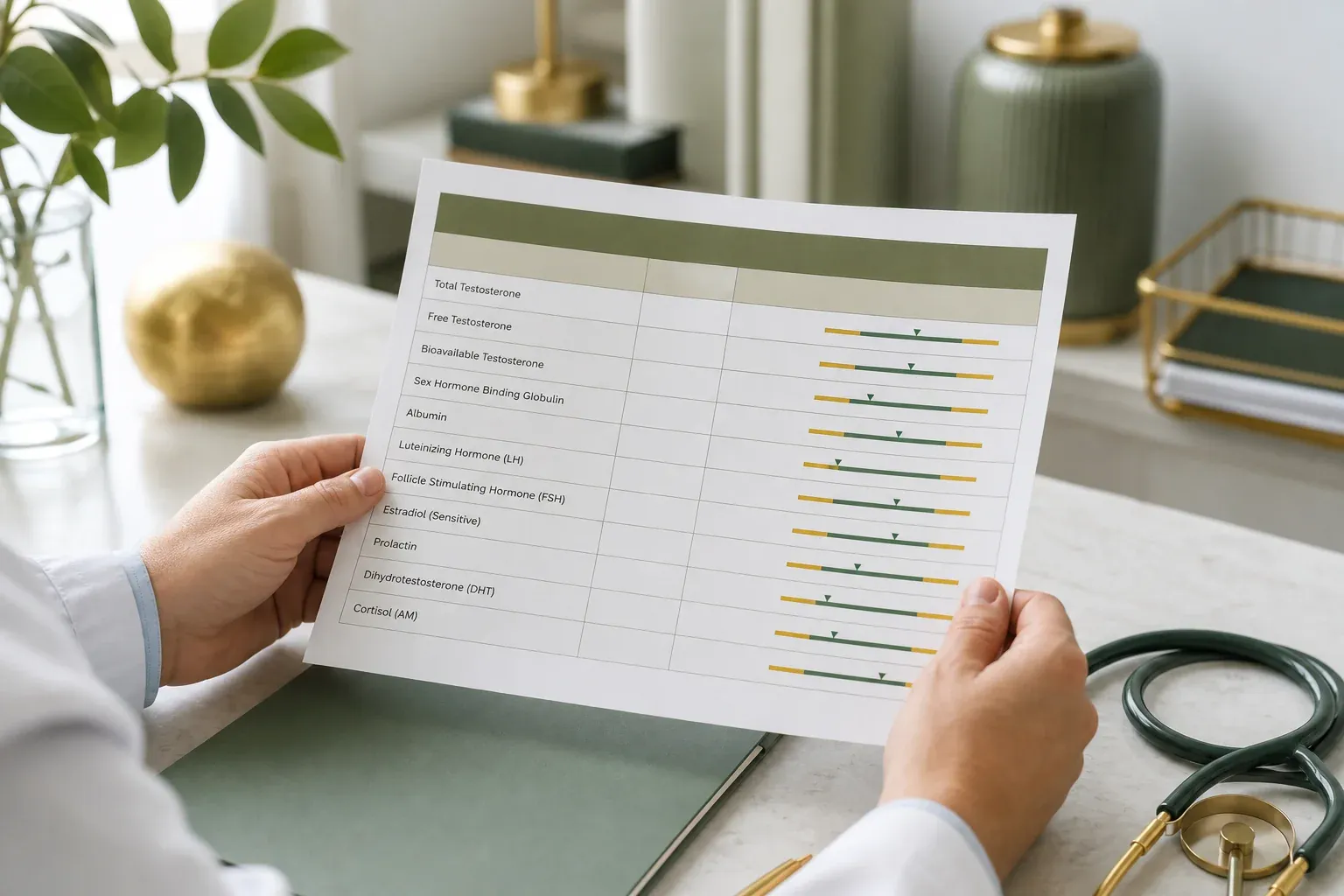
A supervised discontinuation runs on bloodwork, not guesswork. Your provider will typically order a hormone panel, testosterone levels (total and sometimes free), LH, FSH, and other markers, at intervals through the tapering process and for months afterward to confirm your body is producing testosterone on its own again.
A comprehensive hormone panel, drawn and interpreted through specialty lab testing for hormones, gives your provider the clearest picture of where your recovery actually stands, rather than relying on symptoms alone.
Is It Safe to Stop Testosterone Therapy Without a Doctor?
Stopping testosterone therapy without medical supervision is not recommended. Beyond the symptom risk, abrupt discontinuation can mask or worsen underlying hormonal or cardiovascular issues that bloodwork would otherwise catch early.
The Endocrine Society's clinical practice guideline on testosterone therapy, published in The Journal of Clinical Endocrinology & Metabolism, calls for ongoing monitoring for men on and coming off testosterone replacement therapy, which is exactly what a supervised discontinuation provides.
Frequently Asked Questions
Can you restart testosterone therapy after stopping?
Yes. Many men who stop testosterone therapy later restart it, whether because symptoms of low testosterone return, bloodwork shows levels have not recovered, or life circumstances change. Restarting typically starts with fresh bloodwork and a consultation rather than picking up your old dose, since your baseline may look different now.
That evaluation is part of what a supervised testosterone therapy discontinuation looks like when circumstances change.
Is it safe to stop testosterone therapy cold turkey?
Stopping testosterone therapy suddenly instead of tapering is not generally recommended. It tends to produce a sharper drop in testosterone levels and a rougher stretch of fatigue, mood changes, and reduced sexual desire. A supervised taper spreads that drop out over weeks or months and gives your provider bloodwork checkpoints to catch problems early.
Does stopping TRT cause muscle loss?
Some muscle loss and a drop in strength are common as testosterone levels decline after stopping testosterone replacement therapy, especially in the months before natural production ramps back up. Staying active and eating adequate protein can help preserve muscle mass during that window, though the underlying hormonal shift is the main driver, not effort alone.
How long before natural testosterone production starts again?
Natural testosterone production often begins recovering within weeks to a few months after stopping TRT, though full recovery to your personal baseline can take longer depending on your age, how long you were on therapy, and your starting hormonal function. Bloodwork, not symptoms, is how your provider confirms where recovery actually stands.
Can lifestyle changes support natural testosterone production after TRT?
Sleep, resistance training, maintaining a healthy body weight, and limiting alcohol can all support your body's ability to produce testosterone naturally, though none of them replace the monitoring a supervised discontinuation provides. Think of lifestyle factors as support for recovery, not a substitute for bloodwork and provider guidance.
Talk to Our Team Before You Stop Testosterone Therapy
Stopping testosterone therapy is safest with a provider guiding your taper, bloodwork, and recovery timeline from the first dose you skip. Book Now to schedule a consultation with the AH Clinics team and build a discontinuation plan suited to your body.
Low testosterone is diagnosed on bloodwork, not symptoms alone. A free consultation starts with the panel.