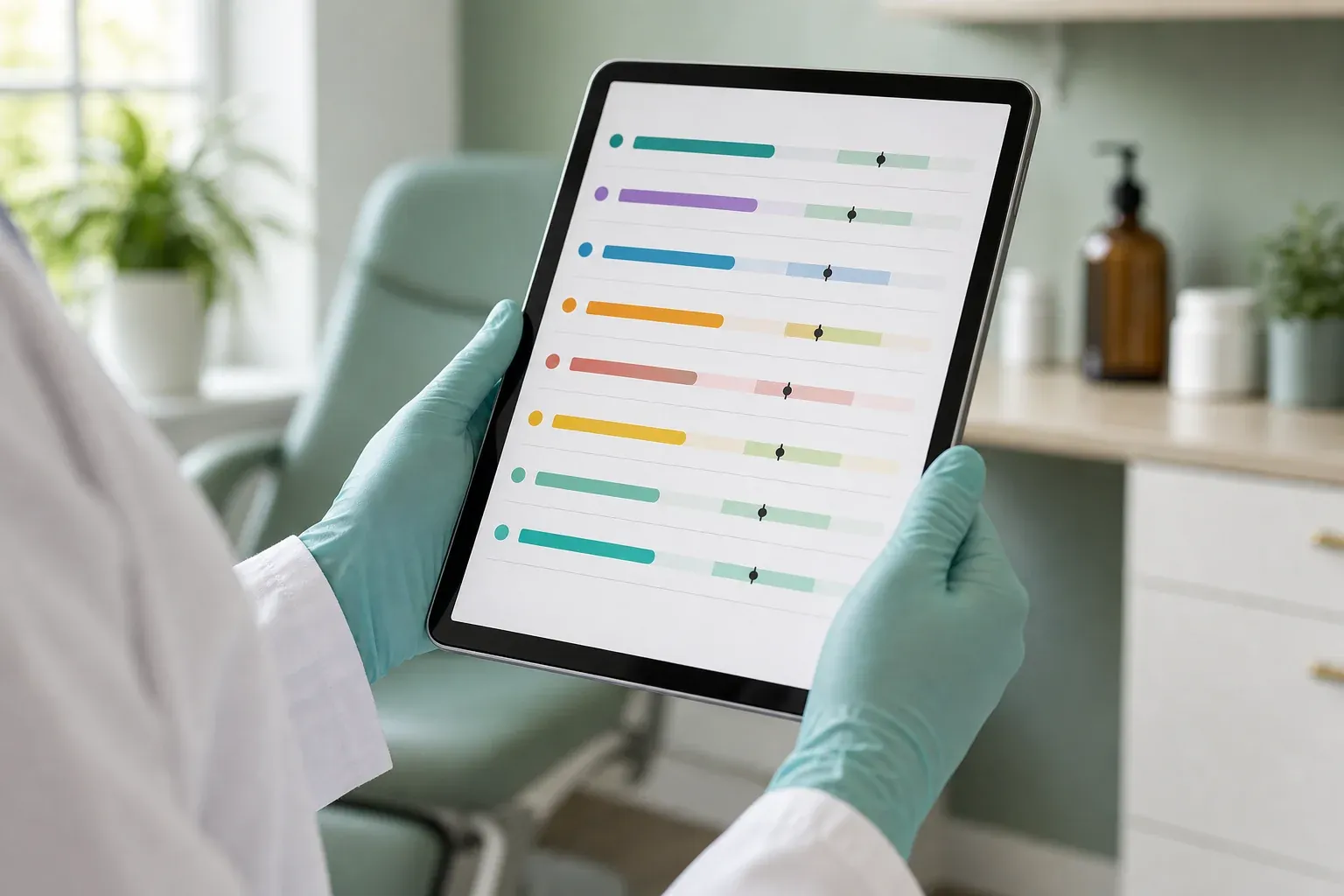

A single total testosterone number rarely tells the whole story. This guide covers what your testosterone lab panel includes beyond total testosterone, from free testosterone and SHBG to LH, FSH, and estradiol, plus the markers our Testosterone Clinic team reviews before recommending any treatment plan.
A complete testosterone lab panel goes well beyond a single total testosterone blood test.
Our team typically orders total testosterone, free testosterone, sex hormone binding globulin (SHBG, the protein that binds testosterone in the blood), luteinizing hormone (LH), follicle stimulating hormone (FSH), and estradiol as the core hormone panel, then adds a complete blood count (CBC), hematocrit, prostate specific antigen (PSA), and a lipid panel to check overall health before any therapy begins.
Total testosterone reports every molecule of the hormone in your blood, whether it is bound to protein or floating free and available for your cells to use. Free testosterone and SHBG together explain why two men with identical total testosterone numbers can feel entirely different. This is testosterone free of SHBG and albumin binding, the small percentage doing the actual work in muscle mass, mood, and libido.
Why Free Testosterone and SHBG Matter More Than One Number
Is Total Testosterone Alone Enough to Diagnose Low T?
No. Total testosterone alone can miss real problems. A man with high SHBG might show a normal total testosterone number while his free testosterone, the biologically active portion, sits low enough to cause fatigue, low libido, and shrinking muscle mass.
That gap is exactly what your testosterone lab panel includes beyond total testosterone: the additional markers that explain the number instead of just reporting it. Doctors check free testosterone and SHBG together because SHBG rises with age, thyroid activity, and certain medications, quietly lowering the free testosterone to SHBG ratio even when total testosterone looks fine.
What Is Considered a Normal Free Testosterone Level?
Reference ranges vary by lab and assay method, so there is no single universal cutoff. Most labs report a normal range that spans a wide window, and a result sitting at the low end of normal can still explain real symptoms in an otherwise active, healthy man. This is why a clinical evaluation, not a lab printout alone, drives the diagnosis.
Our team compares your free testosterone against your age, symptoms, and how you actually function day to day, not just the number on the page.
What LH, FSH, and Estradiol Reveal About Low Testosterone
LH and FSH: Pinpointing the Source
Luteinizing hormone and follicle stimulating hormone tell your doctor where the problem starts. High LH and FSH alongside low testosterone usually point to the testes themselves not responding, called primary hypogonadism. Low or normal LH and FSH alongside low testosterone usually point upstream, to the pituitary or hypothalamus not sending the right signal for production, called secondary hypogonadism.
That distinction changes treatment: Hormone Replacement Therapy alone may not resolve a pituitary driven case, while it works well for testicular causes. Symptoms like mood changes, fatigue, low libido, and disrupted sleep often show up before any single lab value moves, and hormone imbalance symptoms like these are exactly why a full panel, not total testosterone alone, drives the workup.
Estradiol: The Hormone Men Forget to Check
Testosterone converts into estradiol through an enzyme called aromatase, and men need some estradiol for bone density, joint health, and mood stability.
Estradiol is tested alongside testosterone because too little or too much can each cause problems: low estradiol is linked to joint pain and low bone density, while elevated estradiol can cause water retention, mood changes, and blunted results even when testosterone levels look adequate. A comprehensive panel catches both directions, not just the testosterone number in isolation.
A comprehensive testosterone lab panel checks more than hormones. A complete blood count and hematocrit, the percentage of red blood cells in your blood, matter because testosterone therapy can thicken the blood, and a baseline reading lets your clinician catch that shift early.
Prostate specific antigen is checked because testosterone can affect prostate tissue, and a baseline PSA gives a safety reference point before treatment starts. A lipid panel rounds out the workup since testosterone levels influence cholesterol and cardiovascular health, and low testosterone itself is associated with a less favorable lipid profile in many men.
Why TRT Clinics Monitor Estradiol and Hematocrit During Treatment
Once TRT begins, hematocrit and estradiol do not stay static. Rising hematocrit needs monitoring because thicker blood raises clot risk, and rising estradiol from aromatization needs monitoring because it can bring back the fatigue, mood changes, and water retention testosterone therapy is meant to relieve. Ongoing testing, not just the initial panel, is what makes a testosterone program actually safe over time.
How to Prepare for and Interpret a Comprehensive Testosterone Panel
Preparing for Your Blood Draw
Testosterone levels naturally peak in the morning and decline through the day, so most clinics test testosterone between 7 and 10 a.m. for an accurate baseline. Fasting is often recommended when a lipid panel and glucose are included, so ask your clinic beforehand whether you need to arrive fasted.
Timing matters, and so does consistency: if you are tracking testosterone levels over time, testing around the same time of day each visit keeps results comparable.
Reading Your Results: Reference Ranges Aren't One Size Fits All
A lab report lists a reference range next to each marker, but that range reflects a broad population, not you specifically. A free testosterone or total testosterone result near the bottom of normal can still be genuinely low for an otherwise active, symptomatic man, which is why a medical evaluation weighs your numbers against your age, symptoms, and health history rather than the range alone.
This is also where specialty hormone lab testing becomes useful: broader thyroid, cortisol, and metabolic panels can rule out overlapping causes of fatigue, low mood, and weight changes that mimic low testosterone.
How Often Should a Full Hormone Panel Be Repeated?
Retesting frequency depends on where you are in treatment. Men newly starting therapy typically need a full hormone panel repeated within a few months to check how testosterone levels, hematocrit, and estradiol are responding, then less frequently once results stabilize. Men not on treatment but monitoring symptoms may only need a panel repeated annually, or sooner if new symptoms appear.
Because testosterone levels can shift with age, weight, sleep quality, and health changes, treat any single testosterone blood test as a snapshot, not a permanent verdict, and recheck when your situation changes.
Frequently Asked Questions
Does insurance cover a comprehensive testosterone lab panel? Coverage varies by plan and by which markers are ordered. Many insurance plans cover testosterone testing when a doctor documents symptoms of low testosterone, though some panel components, especially specialty or research use markers, may not be covered.
Check with your insurance provider and ask your clinic to confirm which billing codes apply to your specific panel before your visit.
What is a normal total testosterone level for men? Normal total testosterone ranges vary by lab and assay, generally falling within a broad reference range for adult men, and levels naturally decline with age. A number just inside that range does not automatically rule out low testosterone if free testosterone is low or symptoms are present, which is why total testosterone is read alongside the rest of the panel.
Do I need to fast before a testosterone blood test? It depends on what else is ordered. Testosterone itself does not require fasting, but if your panel also includes a lipid panel or glucose, fasting for 8 to 12 hours beforehand is often recommended. Confirm fasting instructions with your clinic when you schedule, since requirements differ by lab.
How long does it take to get testosterone lab panel results? Most testosterone panels return results within a few business days, though some specialty markers can take longer. Your clinician reviews the full panel together, not marker by marker, before recommending next steps.
Start Your Comprehensive Hormone Workup at AH Clinics
Guessing at low testosterone from a single number leads to guessing at treatment. Schedule a full testosterone panel and a real conversation about your results with AH Clinics, Book Now , and get answers instead of assumptions.
Low testosterone is diagnosed on bloodwork, not symptoms alone. A free consultation starts with the panel.